 English
 русский
 Français
 Español
 Português
 عربى

Car Seat Ergonomic Support Foam: Types, Density, and Specification Guide
2026-11-04
Content
- 1 What Car Seat Ergonomic Support Foam Actually Does
- 2 Memory Foam vs HR Polyurethane for Ergonomic Support Foam
- 3 Density and Firmness Targets for Each Seating Zone
- 4 Why Molded Foam Beats Cut Slab for Ergonomic Consistency
- 5 How to Specify Ergonomic Support Foam for Production
- 6 Car Seat Ergonomic Support Foam: FAQ
Long-haul fleet seat returns tell the same story every time: a seat that looks ergonomic on paper starts generating driver complaints about tailbone pressure and lower-back burning within months, because the foam inside it flattens, hardens or sags under sustained load. The layer that decides whether a seat keeps its lumbar curve and distributes pelvic pressure is the molded foam core. For OEMs, Tier suppliers and seat system integrators, selecting the right car seat ergonomic support foam is a functional specification, not a comfort add-on.
Car seat ergonomic support foam is a molded polyurethane or viscoelastic memory-foam layer with a defined density, indentation force deflection (IFD) and surface contour, engineered to distribute body pressure and maintain spinal alignment under real driving loads.
The material science has moved past the idea that soft means comfortable. Seat programs now specify foam by measurable behavior: density, resilience, compression set and pressure distribution. When a seat misses its ergonomic target, the fault usually traces back to a foam grade chosen without zone-specific data. That is why the molded foam material and performance optimization process belongs at the front of the seat development timeline, before styling and trim decisions lock in a geometry that foam cannot rescue.
What Car Seat Ergonomic Support Foam Actually Does
Ergonomic support foam performs three measurable functions: it redistributes pressure away from the sit bones, maintains the lumbar curve under dynamic vehicle loads, and damps low-frequency vibration before it reaches the spine.
- Pressure redistribution: the foam must lower peak contact pressure at the ischial tuberosities. A 20% peak-pressure reduction is a realistic target for a dual-density cushion, verified with 3D pressure mapping rather than hand-feel.
- Lumbar curve retention: a lumbar wedge with 8 to 12 degrees of built-in support angle keeps the lordotic curve stable during acceleration and braking. If the foam loses more than 15% of its initial thickness under load, that angle disappears.
- Vibration damping: high-resilience polyurethane with 55-65% resilience absorbs road-induced vibration that slab foam transmits unchanged. In trucks and off-road vehicles, the foam is the last suspension stage before the occupant.
Firm is not the same as supportive
A hard foam that does not yield under the pelvis creates its own pressure points. Supportive foam must be firm enough to hold structure and soft enough to conform. Dual-density molding resolves the contradiction by placing a comfort layer over a load-bearing base.
Memory Foam vs HR Polyurethane for Ergonomic Support Foam
For molded production seats, high-resilience polyurethane is the structural foam of choice, while memory foam earns its place in thin neck and lumbar layers that do not carry full body weight.
Memory foam (viscoelastic PU)
- Slow recovery conforms to shoulder blades and the lumbar curve
- Best as 25-40 mm bolsters, neck pillows and lumbar pads
- Low resilience traps heat; keep profiles thin
- Typical molded density 50-70 kg/m3 in support pads
High-resilience polyurethane
- Fast rebound (55-65% resilience) returns to geometry every cycle
- Suitable for full cushion and backrest cores rated for 100,000+ cycles
- Open cell structure moves air and keeps the surface cooler
- Moldable into dual-density structures with a firm base and soft top
A production seat program almost never uses one foam type. Cushion and backrest cores are molded HR PU; lumbar and neck supports are often memory foam molded at higher density; headrests follow the anti-whiplash requirements of the target market, which often dictate a firmer foam than comfort alone would suggest.
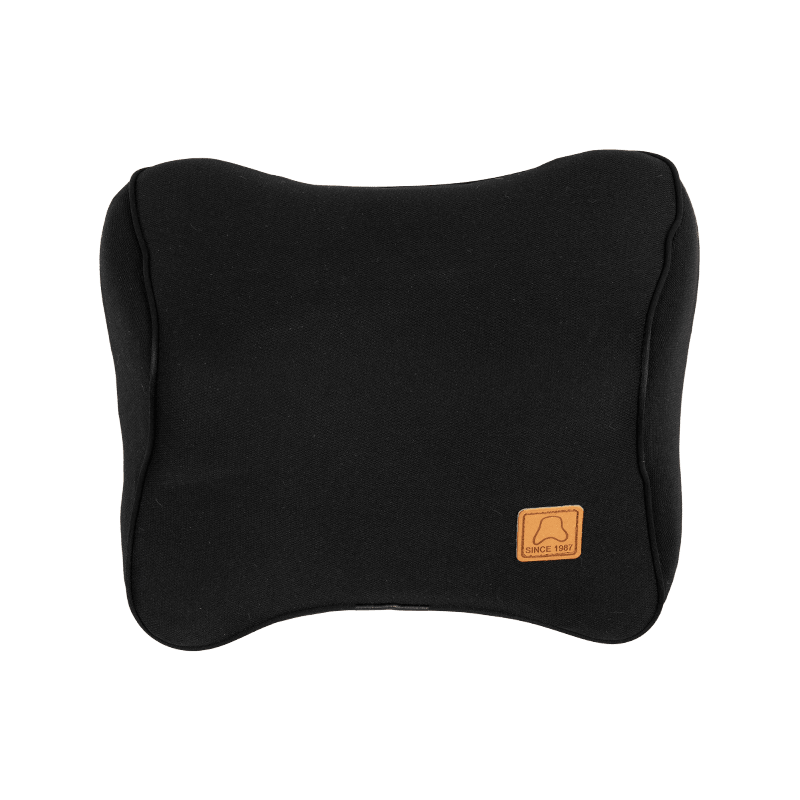
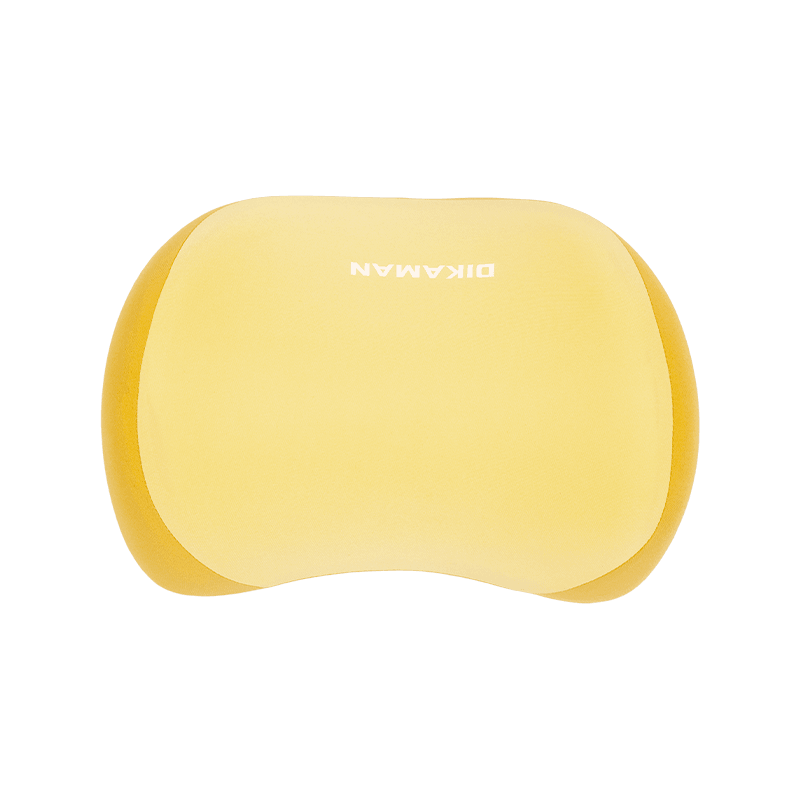
 Memory Foam Neck Headrest Pillow for Automotive UseThis neck pillow uses slow-rebound memory foam to cup the neck area, offering plush support suitable for shorter periods, as discussed in the context.View Product →
Rule of thumb: if the foam must carry full body weight for hours, use HR polyurethane. If it must cup a small body area such as the neck for shorter periods, memory foam is the better tool. The zone decides the chemistry.
Density and Firmness Targets for Each Seating Zone
One foam grade cannot serve a whole seat. Load-bearing zones need 55-75 kg/m3 cores with higher IFD values, while backrest, lumbar and headrest layers must be specified separately with their own density and firmness targets.
Firmness is rated by indentation force deflection (IFD), the force required to compress a foam sample by a set percentage. Automotive cushion foams typically rate 200-350 N at 40% compression; backrest foams run lighter at 120-220 N. Density controls durability and cost; IFD controls how the foam feels. The chart below shows typical molded density targets across five seating zones for a production passenger seat.
Molded density targets in kg/m3; the seat cushion base carries the highest load and is specified first.
Dual-density cushion design: a 30-45 kg/m3 comfort layer molded over a 55-75 kg/m3 load-bearing base cuts peak pressure by about 20% and holds its geometry past 100,000 load cycles on a seat durability rig.
| Seating zone | Typical foam type | Density target | Main ergonomic function |
| Seat cushion core | HR PU, dual-density | 55-75 kg/m3 base, 30-45 kg/m3 top | Pelvic support and pressure distribution |
| Backrest core | HR PU | 45-60 kg/m3 | Lumbar curve support and side bolsters |
| Lumbar pad | Memory foam or HR PU | 55-70 kg/m3 | Lordotic curve retention |
| Headrest | PU or memory foam | 40-55 kg/m3 | Neck alignment and whiplash protection |
| Neck/cervical pillow | Memory foam | 50-65 kg/m3 | Mid-drive neck relief without high load |
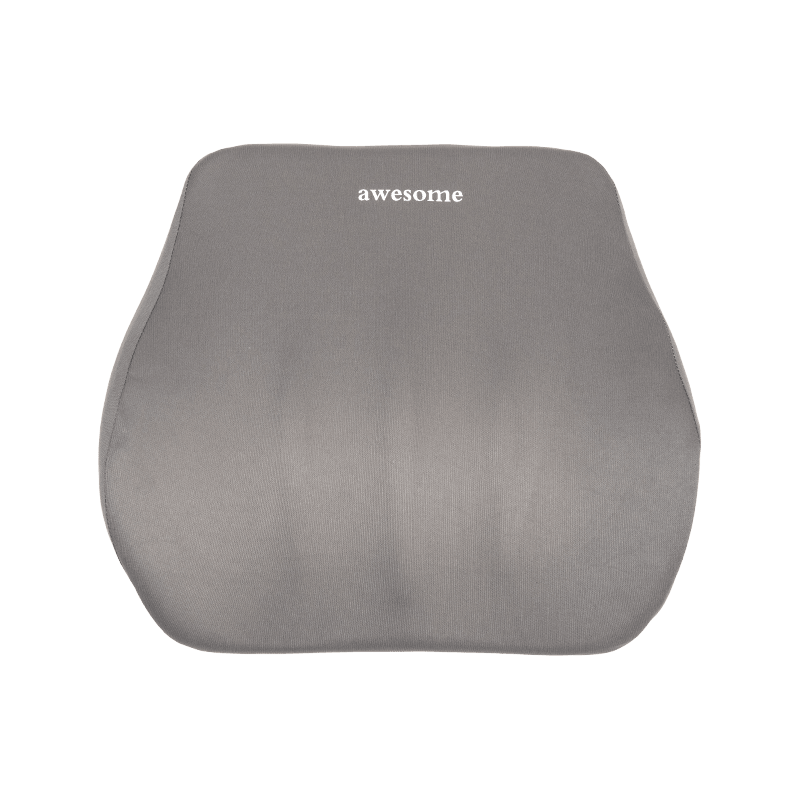
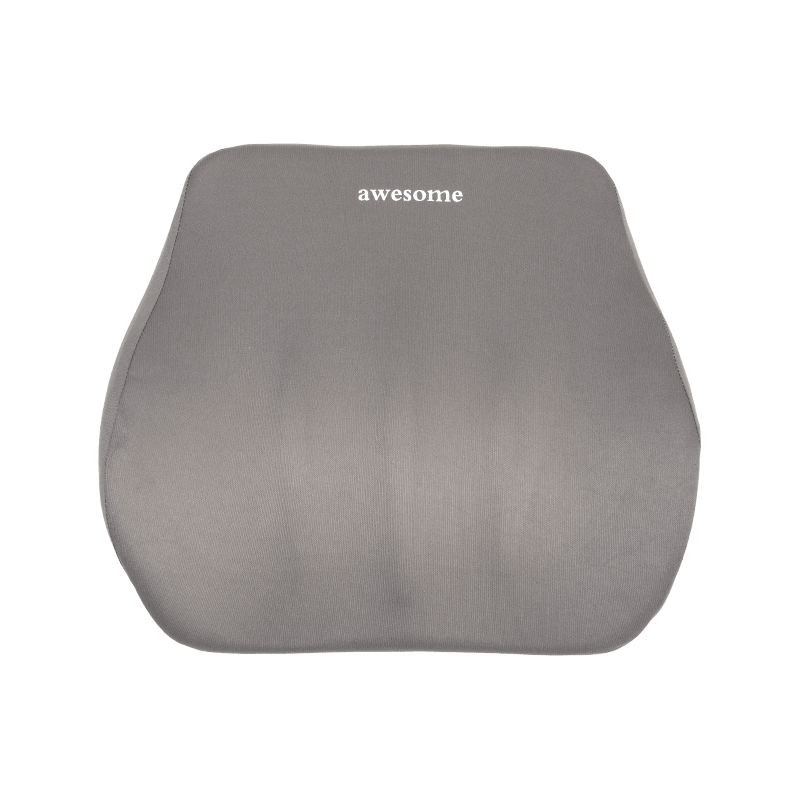
In the lumbar zone, the pad must match the spine's curve and recover its contour after every stop. A contoured memory foam lumbar support molded at 55-70 kg/m3 does that better than a flat slab of any chemistry.
 Contoured Memory Foam Lumbar Support Pillow with 3D ShapeDesigned to match the spine's curve, this contoured lumbar pillow uses BASF MDI foam to recover its contour effectively, fitting the lumbar support discussion.View Product →
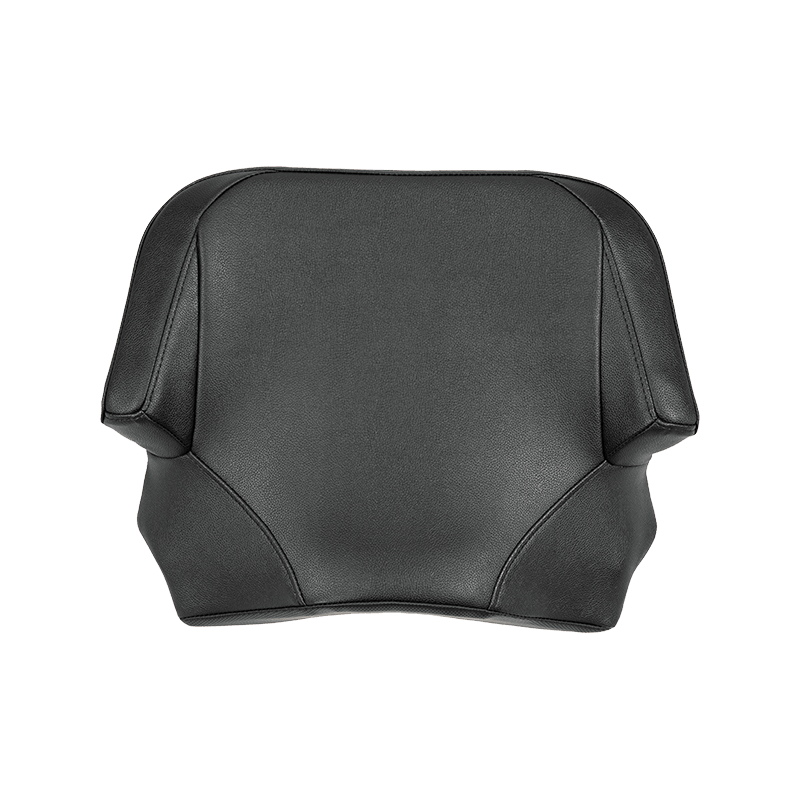
The cushion core carries the heaviest load and the widest temperature swings. This is where dual-density construction matters most: the firm base stops the pelvis sinking to the frame, and the soft top layer keeps contact pressure low.
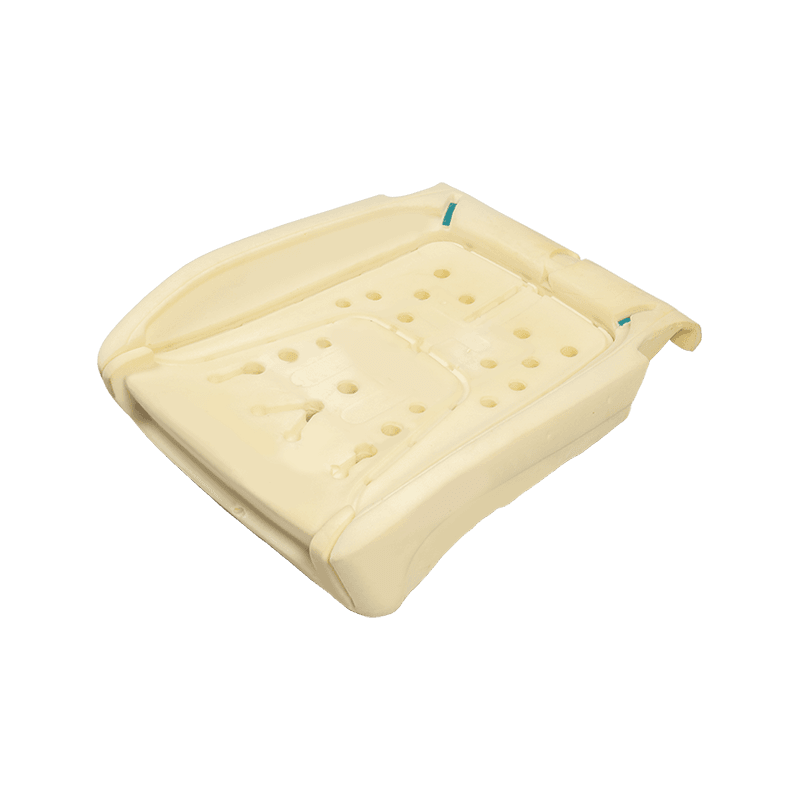 Dual-Density Molded PU Seat Cushion Core Assembly for Front SeatsThis molded cushion core features graduated density zones for load-bearing and comfort, preserving exact contours and a protective skin, as highlighted in the seating core context.View Product →
Why Molded Foam Beats Cut Slab for Ergonomic Consistency
Molded foam reproduces the exact contour, density gradient and surface skin of the engineering design in every single part; cut slab foam can only approximate the shape and loses the dense outer skin that protects the part from tearing.
In molded production, polyol, isocyanate and additives are injected into a machined aluminum mold cavity; the mix foams, fills the cavity and cures under controlled pressure. Every part comes out with the same geometry, the same density distribution and a continuous skin. Cut foam is carved from a slab: the shape is approximate, the skin is removed on every trimmed face, and the exposed cell structure absorbs moisture and wears faster.
Dual-hardness molding takes this further. A cushion can be molded with a firm zone under the pelvis and a soft zone under the thighs in a single part, with no bonding seam. Bonded assemblies have a predictable failure line at the adhesive interface; a dual-density molded part does not.
JX Seat (Zhoushan Jinxin Automotive Parts Co., Ltd.) operates this vertical chain - frame fabrication, molded foam, headrest and armrest assembly, and final seat assembly - for OEM and Tier customers. Foam geometry can therefore be adjusted against the actual seat frame instead of in isolation, which is the kind of development support a foam-only supplier cannot offer: the support point of the foam and the pivot point of the frame behave as one system.
Dimensional tolerance of a well-maintained foam mold. Foam that drifts beyond this tolerance changes the pressure map enough to move the intended support point by about 10 mm on the occupant's back.
How to Specify Ergonomic Support Foam for Production
A production-ready foam specification contains eight parameters: density, IFD at 40% compression, resilience, compression set, tear strength, geometry tolerance, flammability class and dual-density construction details.
- Define pressure targets before choosing foam. Measure the existing seat with a 3D pressure-mapping pad using 50th percentile male and 5th percentile female body forms; record peak pressure and contact area.
- Set density by zone. Cushion cores 55-75 kg/m3, backrest 45-60 kg/m3, lumbar 55-70 kg/m3, headrest 40-55 kg/m3. Reject a single-grade seat spec.
- Confirm IFD at 40% compression. Cushion foam typically 200-350 N, backrest 120-220 N. This value predicts whether a seat feels hard after an hour, not just at first touch.
- Require resilience above 50% and compression set below 12% after 22 hours at 50% compression (ASTM D3574). These two values control long-term sag and ride comfort.
- Verify flammability against the target market: FMVSS 302 for North America, ECE R118 for European commercial vehicles.
- Prototype and pressure-test before tooling. Validate with 3D mapping and a seat durability rig; freeze the foam design only after 100,000 cycles show thickness loss under 15%.
Ask for mold-specific data
Ask for compression set and resilience data from the actual mold, not from a material datasheet. Mold process variations change these values by 5-10%; datasheet numbers are measured on laboratory slabs and will not match production parts.
The same logic applies to aftermarket ergonomic cushions. A lumbar pad that passes a compression set test keeps its curve; one that fails costs less but delivers zero support by the third week. Buyers evaluating memory foam neck and lumbar products should ask for molded construction plus the same density and recovery data used in seat development.
Car Seat Ergonomic Support Foam: FAQ
How dense should car seat ergonomic support foam be?
For load-bearing zones, specify 55-75 kg/m3 molded polyurethane in the cushion and 45-60 kg/m3 in the backrest. Lumbar and neck pads work well at 50-70 kg/m3 with slower recovery if memory foam is used. Below 40 kg/m3 the foam will not survive extended fleet use without visible sag.
Is memory foam or polyurethane better for car seat support?
The answer depends on the zone. High-resilience polyurethane is better for full cushion and backrest cores because it recovers fast and carries weight for hours. Memory foam performs best in lumbar and neck pads, where the contact area is small and conformability matters more than rebound speed.
Can one foam grade support the whole seat?
No. A single foam grade forces a compromise between the cushion, which needs a firm dense core, and the headrest, which needs a lighter feel. Dual-density molding combines two formulations in one part, and it is the standard approach for production seat programs.
How do OEM customers validate ergonomic foam before mass production?
Validation combines material tests (density, IFD, resilience, compression set), component-level pressure mapping, and seat-level tests including durability cycles, thermal aging and dynamic sled tests. Approval is given for the complete system - foam, trim, frame and adjusters - not for the foam as an isolated material.
Bottom line: specify foam the way you would specify a suspension component - with density, IFD, resilience and set data - and validate it on the actual seat. The foam is the ergonomic system's first line of defense.

Copyright © Zhoushan Jinxin Auto Parts Co., Ltd. All Rights Reserved.
Custom OEM Car Seat Frame Assembly Suppliers
