
 English
 русский
 Français
 Español
 Português
 عربى

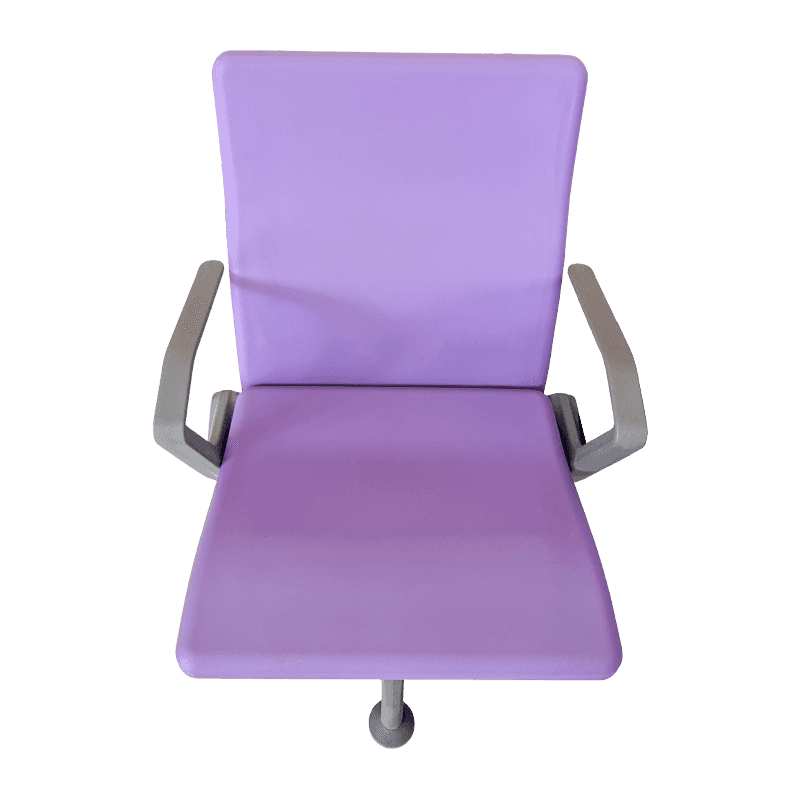
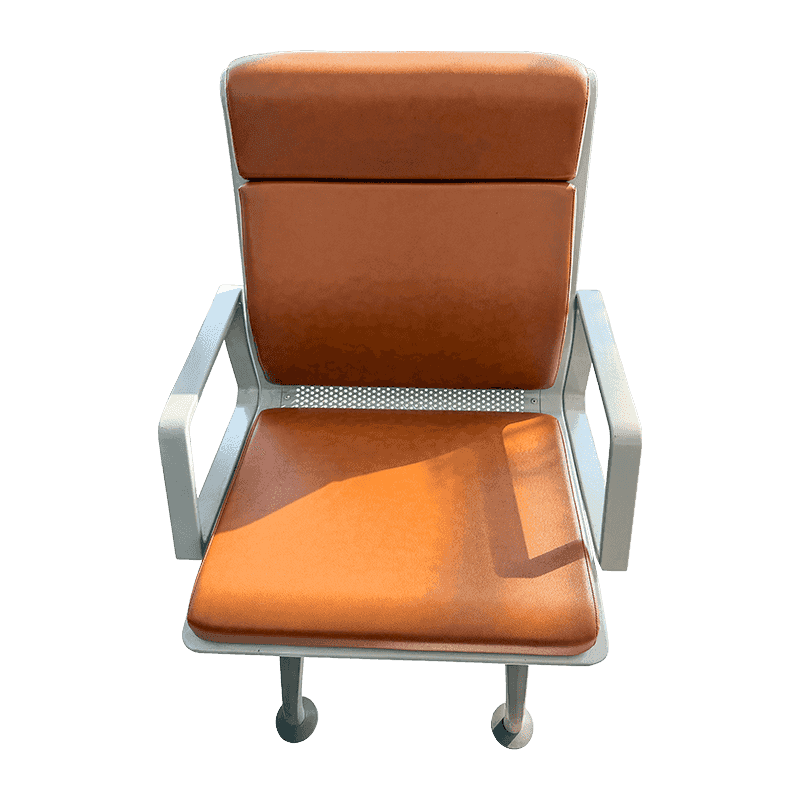
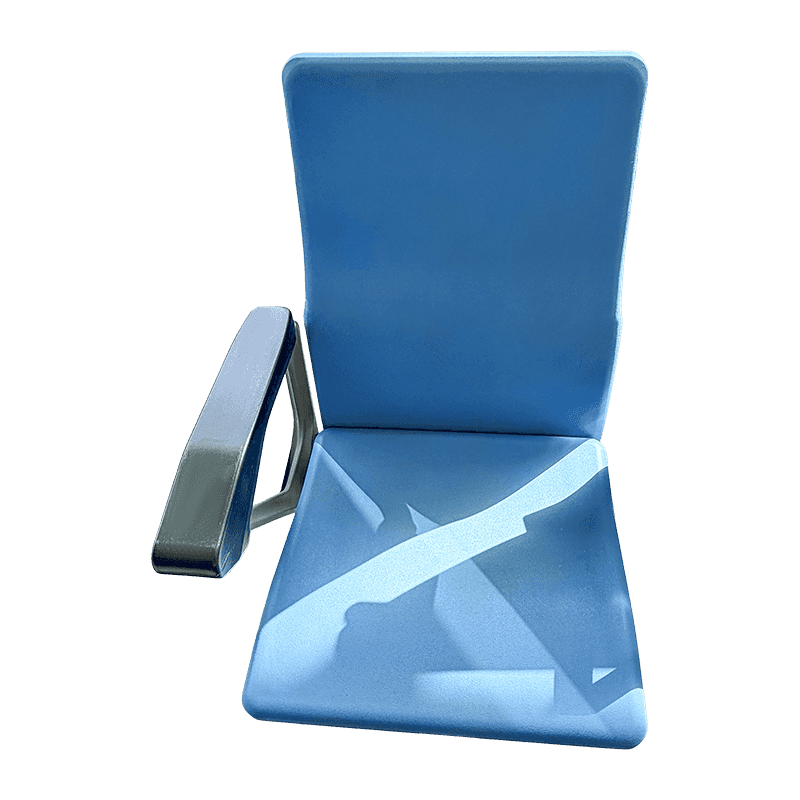
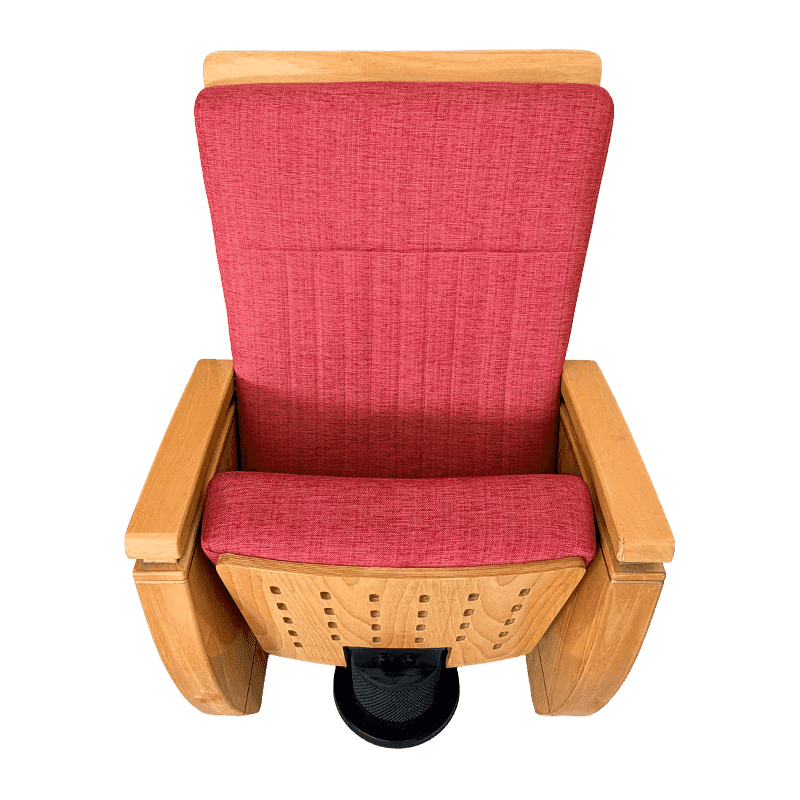
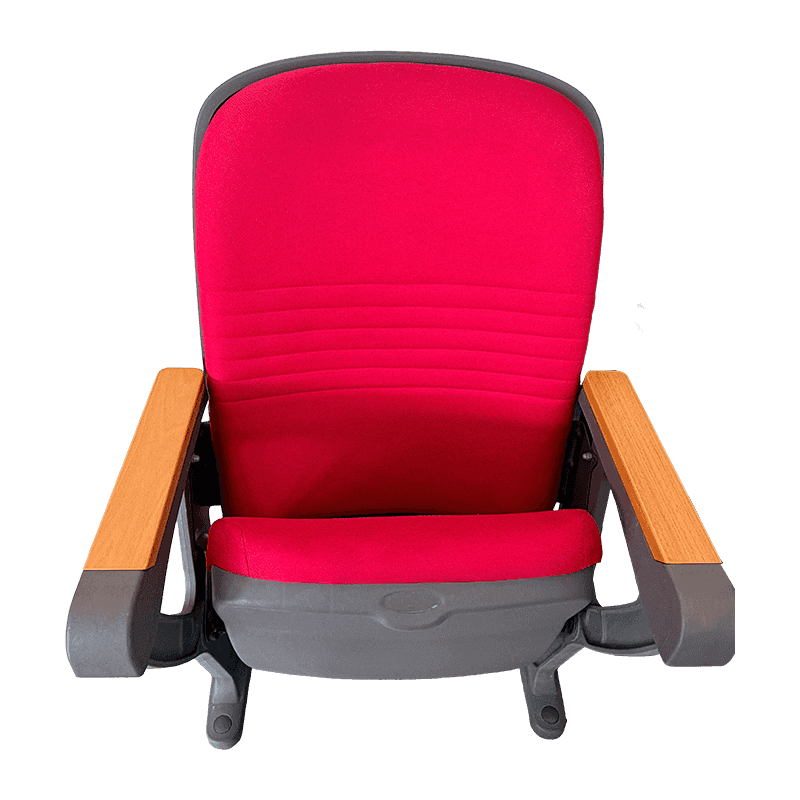
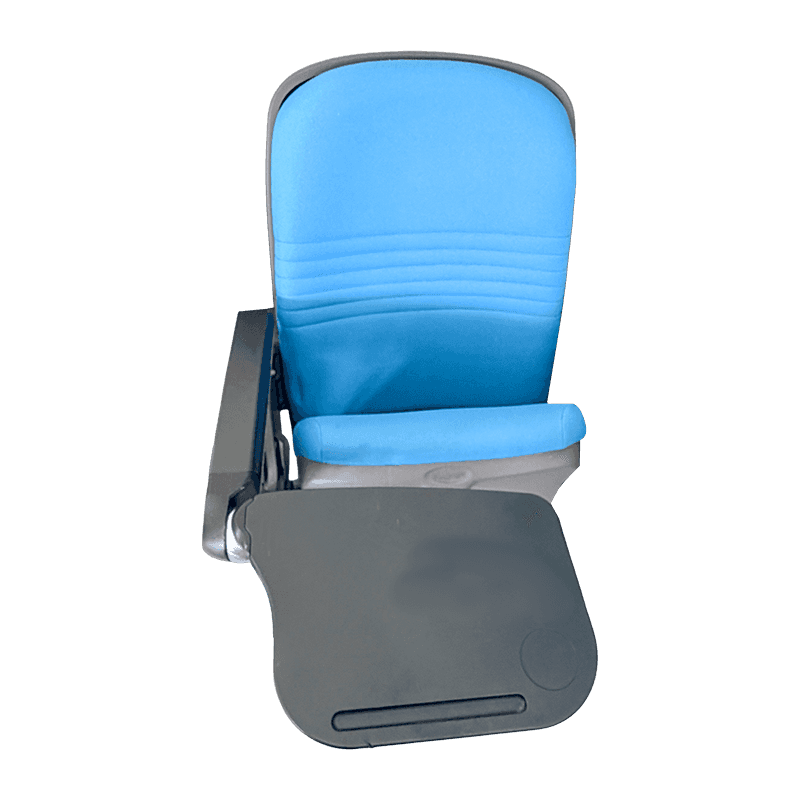

Premium Cinema Recliners and Public Waiting Area Seating
Zhoushan Jinxin Auto Parts Co., Ltd. designs and manufactures premium cinema recliner chairs and public waiting area seating from our production base in Zhejiang Province, China. Established in 2000, the company supplies molded polyurethane foam, steel seat frames, headrest frames, armrest assemblies, and complete seat systems to automotive OEMs including Dongfeng, Lear, and Geely. Annual sales exceed RMB 150 million, supported by a professional technical team and a factory area dedicated to foam molding, metal fabrication, and final assembly. That same engineering depth now serves cinema operators, airport authorities, hospital project teams, and transit agencies that require seating able to withstand years of continuous public use.
We operate as China cinema recliner chairs manufacturers, producing theater seating with heavy-duty steel frames, multi-density molded foam, and manual or motorized recline systems. Our production lines cover frame welding, cold-cure foam molding, integral skin foam molding, and final seat assembly, allowing large seating programs to be supplied from one factory with consistent quality and direct communication between engineering and production.
Cinema Recliner Seats for High-Occupancy Auditoriums
Cinema seating operates under one of the most demanding load patterns in the furniture industry. Seats are raised and lowered thousands of times per year. Armrests are pushed, leaned on, and used as support during entry and exit. Recliner mechanisms must perform smoothly while supporting occupant weight in multiple positions.
Our cinema recliner solution combines a welded steel frame, a synchronized recline mechanism, and a molded polyurethane foam system shaped for the backrest, seat cushion, and headrest. The foam is produced by cold-cure molding in preheated closed molds, with polyol and isocyanate mixed in precise proportions to achieve the required density and hardness. Where auditorium layouts call for a softer seating zone in one section and firmer support in another, the foam formulation and frame geometry can be adjusted in stages.
For premium lounges and VIP auditoriums, we also supply fully motorized recliners with low-voltage actuation, integrated cup holders, and customized upholstery. Electrical configurations, actuator routing, and control voltages are reviewed with the project engineering team before tooling and production begin, so that site installation requirements are clear from the start.
Public Waiting Area Seats and Continuous Benches
As a public waiting area seats factory, we manufacture durable seating programs for clinics, municipal facilities, transit stations, and corporate campuses. The product family includes floor-mounted continuous benches, wall-mounted folding seats, individual chairs with armrests, and modular waiting systems that can be extended as capacity grows.
The structural core is a steel frame fabricated in our own welding shop. Seat and backrest panels are covered with molded foam pads in densities selected for long occupancy. For waiting areas where people may sit for hours, the foam is formulated to resist compression set and maintain a consistent seating height over its service life. For high-turnover areas such as ticket halls and emergency departments, the same frame can be fitted with firmer foam and a smoother surface finish to support quick cleaning and heavy traffic.
Because the frame and foam are engineered by the same factory, adjustments to seat height, backrest angle, and overall width can be implemented without complex coordination across multiple suppliers. This is especially useful for projects that require many configuration variants across a single building or campus.
Custom Airport Waiting Benches and Terminal Seating
Airport terminals combine three conflicting demands: very high passenger volume, strict cleaning schedules, and architectural design requirements. As a custom airport waiting bench factory, we approach terminal seating with frame systems designed for long spans, stable mounting, and minimal maintenance.
Bench frames can be delivered as floor-mounted cantilevers with clear leg space that simplifies floor cleaning, or as continuous beams supported at regular intervals along the terminal structure. Seating modules are sized to match gate zones, baggage claim areas, and departure lounges. Armrests are molded in integral skin polyurethane, producing a dense, non-porous surface that resists scratches and prevents liquids from soaking into the armrest core. Upholstered cushions in high-density molded foam can be paired with textile, polyurethane, or leather-like finishes according to the terminal design language.
Where a project requires integrated power outlets, USB charging, or signage, the bench frame can be adapted with mounting points and cable channels. These additions are reviewed by our engineering team to confirm that structural strength and electrical clearance meet project requirements.
Hospital and Station Waiting Chairs
For medical institutions and railway facilities, waiting seating must combine hygiene, safety, and durability. Our hospital and station waiting chair factory produces seating with smooth contours, dense molded foam, and surface materials that tolerate frequent disinfection. Frames are designed without sharp edges and with rounded profiles that reduce the risk of injury in crowded waiting environments.
In hospital outpatient halls, chairs are often specified with armrests to help elderly or mobility-impaired patients sit and stand safely. In railway stations and metro platforms, seating is specified with high backrests and defined seat boundaries to support orderly queuing and comfortable waiting during peak periods. The same frame platform can be configured as a single chair, a back-to-back pair, or a continuous bench with any number of positions.
Materials are selected in cooperation with the project team, taking into account cleaning agents, local fire regulations, and expected daily occupancy. The engineering team confirms the final foam density, surface finish, and mounting method before serial production.
Frame Engineering and Structural Performance
The frame is the part of a public seat that determines its safe service life. Our frame workshop uses high-strength steel, stamping, welding, and fixture-based assembly to produce components with repeatable dimensional accuracy. Welded frames are verified on coordinate measuring machines at critical measurement points, and statistical process control maintains consistency across large production runs.
For cinema recliners, the frame carries the recline mechanism, side plates, and armrest brackets, and must absorb the loads imposed when an occupant changes sitting position. For waiting benches, the frame must distribute the weight of multiple occupants to the floor without excessive deflection. In both cases, load paths are designed to avoid stress concentrations at weld joints and bracket edges. Specific structural calculations, including dynamic load cases for motorized recliners and tip-over resistance for public benches, are confirmed with the project engineering team when the final design is approved.
Molded Foam for Comfort and Long-Term Shape Retention
Molded polyurethane foam is the core of seat comfort. Using cold-cure molding, we inject polyol and isocyanate into closed molds preheated to 50 to 65 degrees Celsius, producing cushion and backrest cores with precisely controlled geometry. The molding cycle typically lasts 4 to 8 minutes, enabling large production volumes without compromising part quality.
Modern seat foaming uses multi-density zoning technology, in which different reaction mixtures are injected into different areas of the same mold. This creates a gradient hardness distribution: a soft seating zone in the center and firm side bolsters in the same cushion, without adhesive assembly. For public seating, this translates into a comfortable seating feel that does not bottom out under heavier occupants. Key performance indicators such as density, resilience, compression set, tensile strength, and tear strength are adjusted through the polyol blend, catalyst system, and blowing agent. The values are specified by the engineering team according to the application.
Integral Skin Foam for Armrests, Headrests, and Protective Trim
Armrests are the most frequently touched part of any public seat. We produce them using integral skin foam technology, where a dense, non-porous skin forms at the mold surface while the core remains porous and elastic. The skin and core are chemically bonded, so there is no adhesive interface and no risk of delamination. The armrest is effectively one continuous material: hard-wearing on the outside, resilient on the inside.
The skin thickness can be controlled between 0.8 and 2.5 mm, and the surface hardness can be regulated between Shore A 55 and 88. In-mold coloring avoids coating wear exposing a different material underneath. The same technology is used for headrests, side pads, and bumper elements in ambulance interiors, and can be applied to cinema seating armrests or terminal bench dividers. Surface texture can replicate natural leather grain or custom geometric patterns, depending on the mold finish.
Customization and OEM/ODM Project Support
Because our factory controls frame fabrication, foam molding, armrest molding, and final assembly in-house, we can support OEM and ODM projects with a single engineering team. Each project starts with a specification review: seat dimensions, row spacing, recline travel, mounting interfaces, weight capacity, surface materials, colors, and expected daily use.
The engineering team then proposes a frame and foam construction, defines the measurement and test points, and prepares the production documentation. For projects that include motorized recliners, the electrical configuration, actuator positions, and control system are reviewed to ensure compatibility with the venue installation. For large airport, hospital, or station projects, multiple seat configurations can be developed on the same frame platform to reduce spare parts inventory and simplify maintenance.
Some parameters require site-specific confirmation before tooling begins. These include fire test requirements, local safety regulations, specific cleaning chemicals, and mechanical fixing patterns. The engineering team will confirm the applicable values when the project information is received.
Quality Management and Testing
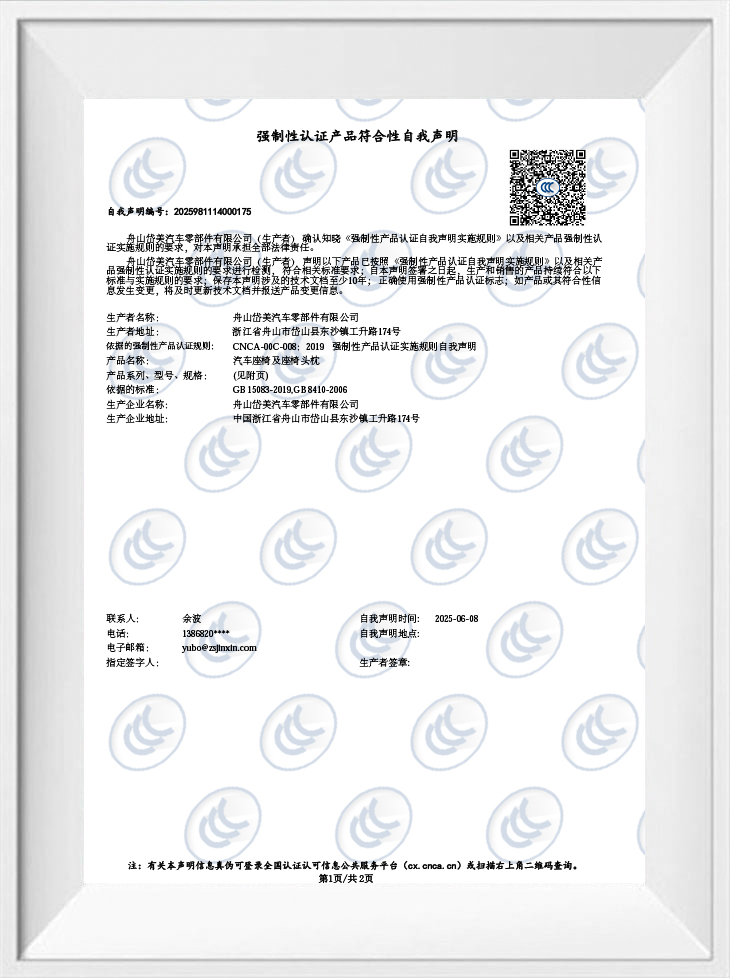
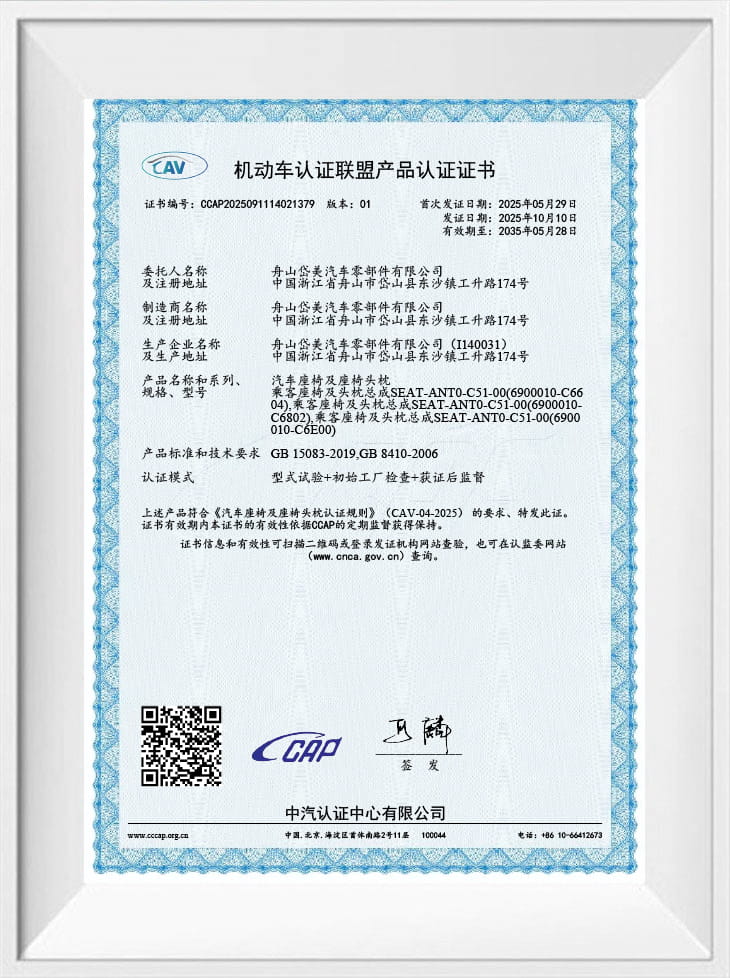
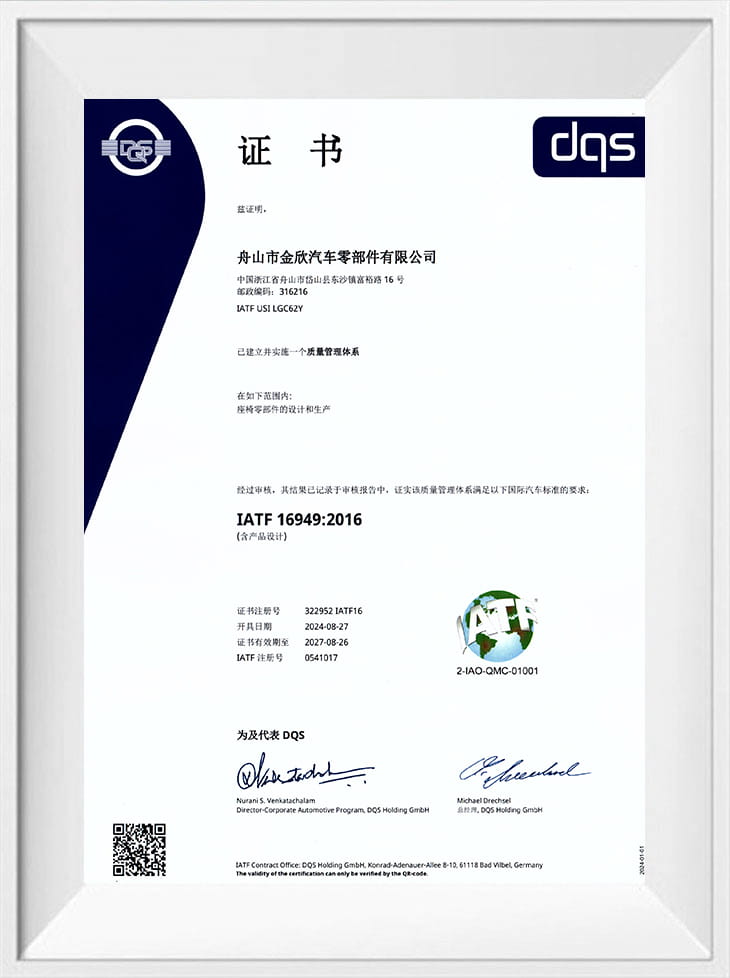
Quality management at our factory follows the automotive supplier framework. We hold IATF 16949:2016 certification for automotive quality management, CCC certification for products subject to China Compulsory Certification, and ISO 14001 certification for environmental management. The same quality system covers cinema recliners and public waiting area seating because these products share the same production lines for frames, foam, and armrests.
Seat components are validated through load testing, fatigue testing, and environmental testing adapted from our automotive programs. For example, armrests for public seating are subject to abrasion testing, compression permanent set testing, and temperature cycling. Frames are verified for dimensional accuracy and weld integrity. Final assemblies are inspected before packaging. Detailed test specifications for a particular project are documented in the quality plan and agreed with the customer at the start of the project.
Product Series and Configuration Overview
| Product Series | Target Environment | Frame and Mechanism | Foam and Surface | Customization Parameters |
|---|---|---|---|---|
| Premium Cinema Recliner | VIP auditoriums, luxury theaters | Welded steel frame, manual or motorized recline | Multi-density molded foam; fabric, PU, or leather finish | Row spacing, recline angle, armrest width, cup holder layout |
| Standard Cinema Row Seat | Main auditoriums | Steel frame with gravity or spring-assisted dump | High-resilience molded foam; fabric finish | Seat pitch, seat width, aisle layout, armrest count |
| Airport Waiting Bench | Departure lounges, baggage claim | Floor or wall-mounted steel base, long-span beam | High-density molded foam; integral skin armrests | Span length, module count, floor fixing pattern |
| Hospital Waiting Chair | Outpatient halls, emergency rooms | Cantilever or four-leg steel frame, rounded edges | Dense molded foam; stain-resistant upholstery | Seat height, backrest height, armrest requirement |
| Station Waiting Seat | Railway platforms, metro stations | Heavy-duty steel frame, anti-tamper fixing | High-resilience foam; PU or powder-coated finish | Mounting type, seat count, backrest style |
Frequently Asked Questions
Q1: What frame designs are available for cinema recliners and public waiting benches?
A: Our product range includes steel frames for individual recliners, continuous row seating, cantilever benches, wall-mounted folding seats, and free-standing waiting chairs. Frame details such as recliner pivot position, footrest linkage, and floor fixing layouts can be adapted. Structural calculations and mounting interfaces are confirmed with the engineering team before serial production.
Q2: Can the factory supply complete seat assemblies and individual replacement parts?
A: Yes. Because frame fabrication, foam molding, integral skin armrest molding, and final assembly are all performed in-house, we can supply complete seats for new projects or individual components such as cushion cores, backrest pads, and armrests for installed seating. This simplifies maintenance for venue operators.
Q3: What surface materials are suitable for high-traffic public waiting areas?
A: For armrests and trim panels, molded integral skin polyurethane is recommended because it forms a dense skin that resists scratching and cleans easily. For cushions and backrests, textile, polyurethane, and leather-like materials can be applied over the molded foam core. The final selection depends on cleaning procedures, fire-performance requirements, and expected daily occupancy, which our engineering team confirms with the project team.
Q4: How is molded foam configured for waiting areas where people sit for long periods?
A: We use cold-cure molded polyurethane foam with density and hardness values selected for the application. Multi-density zoning creates a soft seating zone with firmer side support in a single molded part. For long-duration seating, the formulation is adjusted to reduce compression set, so the cushion height remains stable over years of use. Exact target values are documented in the project specification.
Q5: What information should a buyer prepare for a custom cinema or waiting area seating project?
A: A drawing, sketch, or technical specification with seat dimensions, row or bench layout, mounting method, load requirement, surface finish, and color is the starting point. For motorized recliners, the control voltage, actuator space, and wiring route should also be included. Our engineering team will review this information and propose a frame and foam construction suitable for approval.
Company Summary
Zhoushan Jinxin Auto Parts Co., Ltd. supplies premium cinema recliners, public waiting area seats, custom airport waiting benches, and hospital and station waiting chairs from one integrated factory. Capabilities include steel frame fabrication, cold-cure molded polyurethane foam, integral skin foam armrests, and complete seat assembly, supported by IATF 16949, CCC, and ISO 14001 quality credentials. The factory produces durable seating that meets the needs of cinema operators, airport authorities, hospital project teams, and transit agencies.
