 English
 русский
 Français
 Español
 Português
 عربى

Automotive Headrest Safety Requirements: Height, Backset and Static Strength
2026-11-25
Content
- 1 Headrest Safety Requirements Rest on Three Measurable Numbers
- 2 Automotive Headrest Safety Requirements: Where FMVSS 202a, UN R25 and IIHS Diverge
- 3 Backset Is the Cheapest Millimetre to Fix and the Most Expensive to Ignore
- 4 Frames, Foam and Locking: Where the 373 N·m Requirement Is Won
- 5 Adjustable, Foldable or Fixed: Matching Architecture to Seat Position
- 6 What a Headrest Validation Report Must Carry Before PPAP
- 7 A Procurement Checklist for Headrest Programmes
- 8 Frequently Asked Questions
A front head restraint that measures 760 mm above the H-point can still fail the geometry check that decides whiplash outcomes, because height is only one of three numbers in play. The other two are backset, the horizontal gap between the back of the head and the face of the restraint, and the rearward moment the assembly survives before it folds. FMVSS 202a caps backset at 55 mm and demands 373 N·m of static strength, while UN R25 asks for a tighter 50 mm and adds an energy-absorption test the US rule never includes. The automotive headrest safety requirements that actually decide a pass or fail are geometric, structural and material at the same time, and each one is measured separately.
Headrest Safety Requirements Rest on Three Measurable Numbers
Every regulated head restraint is judged on height, backset and static strength, and each number exists to control a different injury mechanism. Height limits how far the skull can rotate backwards over the top edge of the restraint. Backset controls how much rearward travel happens before the head is supported at all. Static strength decides whether the assembly stays where the seat designer put it once contact occurs.
Definition: a head restraint is the complete seat-mounted assembly, meaning the moulded foam pad, the internal wire or tube frame, the stay rods and the locking mechanism that together limit rearward head travel. The visible cushion is only the outer skin of that system.
The mechanism behind those numbers is the same in every rear impact. The seatback pushes the torso forward, the head lags behind on the neck, and the cervical spine is forced into an S-shaped curve before any support arrives. A restraint that sits high and close converts that lag into a short, controlled contact. One set low and far back lets the skull rotate further, and the capsular ligaments and facet joints absorb the difference.
Consumer testing measures the same two dimensions in the same way. The Insurance Institute for Highway Safety places a measuring device against the front face of the restraint, records backset and height at every seating position, and derives its good, acceptable, marginal or poor rating from geometry alone, before any crash test is run.
Automotive Headrest Safety Requirements: Where FMVSS 202a, UN R25 and IIHS Diverge
The three reference points agree on intent and disagree on limits, so a restraint approved in one market can still rate badly in another. The differences are small enough to hide in a specification sheet and large enough to fail a sample.
| Requirement | FMVSS 202a (US) | UN R25 (Europe) | IIHS geometry rating |
| Minimum height above H-point | 750 mm | 800 mm in top position, 720 mm in lowest | 800 mm for a good rating |
| Maximum backset | 55 mm | 50 mm | 70 mm for good, 90 mm acceptable |
| Static rearward moment | 373 N·m | 373 N·m | Not rated |
| Energy absorption | Not required | 6.8 kg head form at 24.1 km/h, 80 g ceiling over 3 ms | Not rated |
| Rear outboard positions | Covered in passenger cars | Where fitted | Rated |
Two differences matter most during design. First, UN R25 adds an energy-absorption test that FMVSS 202a does not include, so a pad engineered only for the US rule can return a deceleration curve well above the 80 g ceiling. Second, the European height figures are stated for the highest and lowest locked positions, which forces an adjustable design to keep a minimum height even when the restraint is pushed fully down, a point that fixed-restraint programmes never have to resolve.
A programme built to the union of all three sets, 800 mm of reach, 50 mm of backset and 373 N·m, clears every market with one frame and one foam tool. The penalty is a slightly taller pad and a thicker seatback package, which is where the styling argument usually starts.
Backset Is the Cheapest Millimetre to Fix and the Most Expensive to Ignore
Backset moves whiplash risk more per millimetre than any other headrest dimension, and it is the one dimension still open for adjustment at the packaging stage, long after tooling has been cut.
Lower is better. Rating bands describe consumer-test geometry, not legal limits.
The IIHS bands are tight and unforgiving. A restraint with 70 mm or less of backset and 800 mm of height earns a good rating, 70 to 90 mm is acceptable, 90 to 110 mm is marginal, and beyond 110 mm the rating drops to poor. Field data from the same institute shows claim frequency falling by roughly a fifth when seats move from the poor band into the good band, which is why most OEMs write a numeric backset target into the seat specification instead of quoting the regulation.
Most backset problems are packaging problems. A headliner that curves down at the rear, a seatback deep enough to house a screen, or a belt routing that pushes the occupant forward can each add tens of millimetres that nobody notices until the geometry check is run on a physical seat.
Frames, Foam and Locking: Where the 373 N·m Requirement Is Won
Static strength is decided inside the assembly, by the stay rods, the frame tabs that hold them and the locking pawl, while energy absorption is decided by the foam, and those two requirements pull against each other.
A typical front headrest uses two 10 to 12 mm steel stay rods welded into a bent wire frame, with the rod ends engaging a latch plate in the seatback. The moment arm from the top of the pad to the H-point is long, so the 373 N·m test loads those welds hard. A rod one millimetre under size, or a weld with insufficient throat thickness, shows up as permanent set after the test even though the part looked correct on the jig. High-resilience polyurethane at 45 to 65 kg/m³ gives the pad enough structure to spread the load, while the outer contour and any internal insert decide the deceleration curve under the head form.
- Stay rod diameter and weld throat thickness carry the static moment, so both belong on the drawing, not in a supplier's internal standard.
- Latch engagement depth must survive abuse loads as well as the moment test, because the same pawl holds the pad during a door slam and a luggage push.
- Foam density and hardness are set by the energy-absorption curve first and by comfort targets second.
- Skin thickness and seam placement change the surface stiffness at the point the head form strikes hardest.
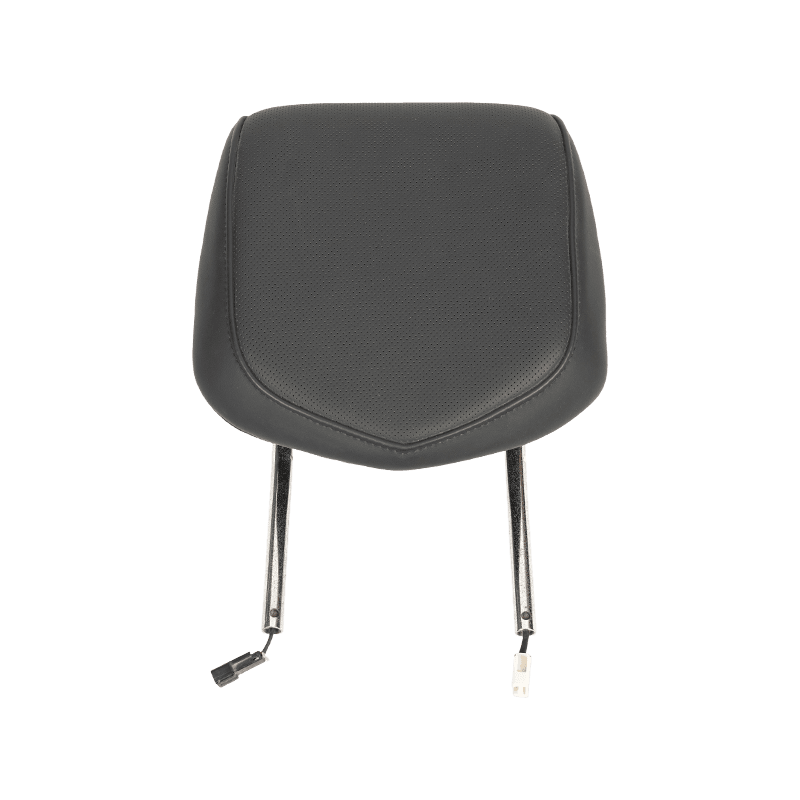
Adjustable multi-angle frames built for exactly this load path are listed in the headrest frame range, where the locking geometry and rod sizing are matched to the moment requirement rather than to a weight target.
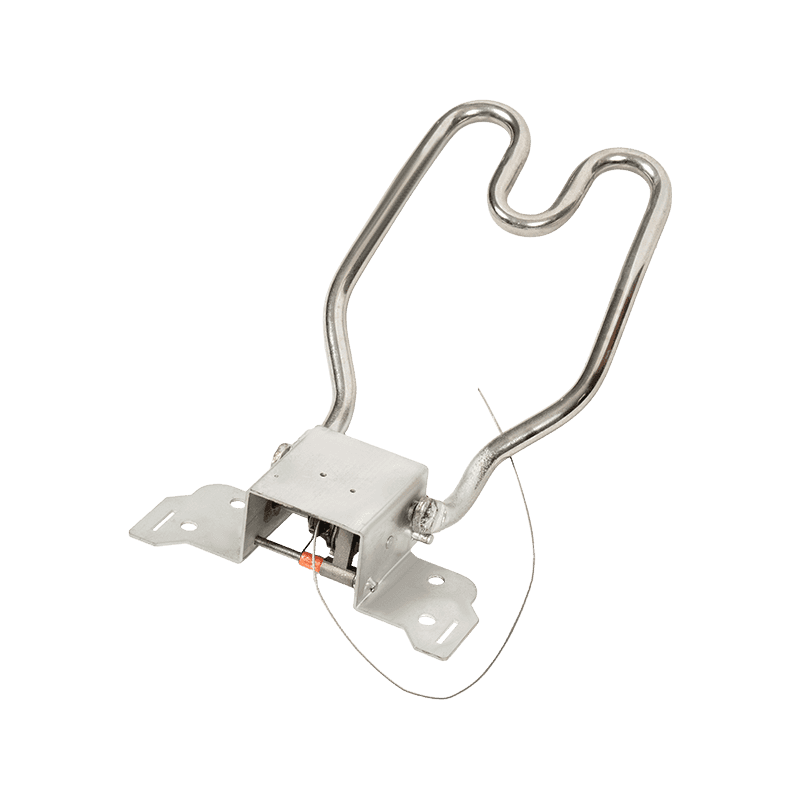 Multi-Angle Adjustable Seat Headrest Internal Frame AssemblyInternal frame with independent forward/back tilt, vertical elevation and locking base; suited to seat positions needing adjustable support and compliance headroom.View Product →
Adjustable, Foldable or Fixed: Matching Architecture to Seat Position
Adjustability buys comfort and compliance headroom and costs weight, cost and one extra failure mode, so the right answer follows the seat position rather than the trim level.
Fixed restraint
- One geometry, locked at the design position
- Lightest frame and lowest part count
- Hardest to tune for a 5th to 95th percentile occupant range
- Best fit for rear outboard and centre positions
Adjustable restraint
- Two to four locked height positions with a visible release
- Taller pad required to keep minimum height in the down position
- Locking mechanism adds a durability and abuse test
- Standard for front outboard seats in global programmes
Rear rows have their own logic. Load-floor estates and MPVs increasingly use cable-controlled headrests that fold through 90 degrees to clear the folded seatback, and the folded state must not leave a hard point in the occupant's path. The release has to work with one hand, must not be triggered by luggage sliding forward, and the restraint still has to pass the geometry check in the upright, locked position.
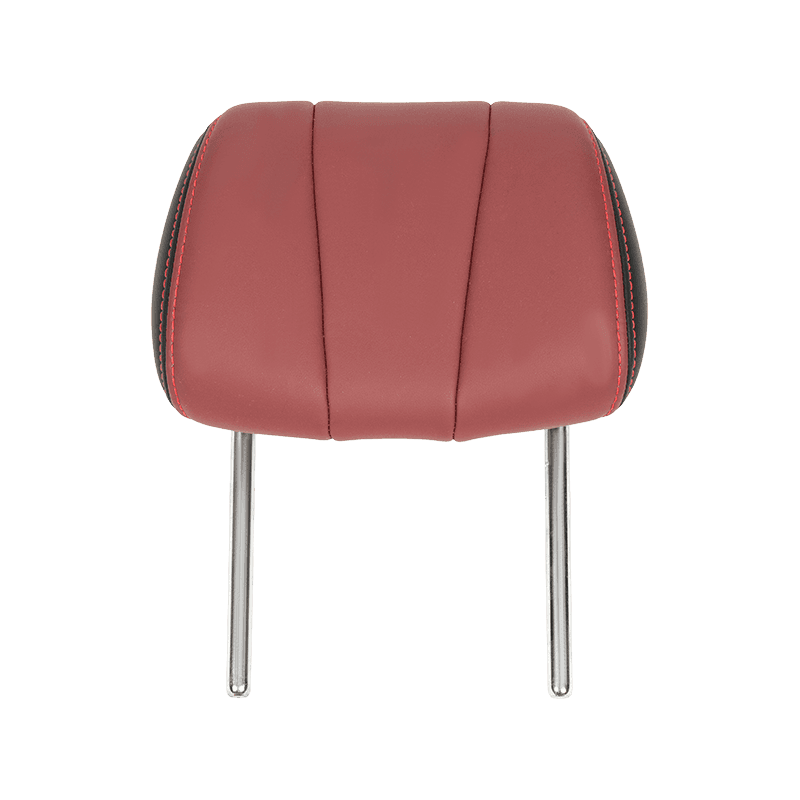
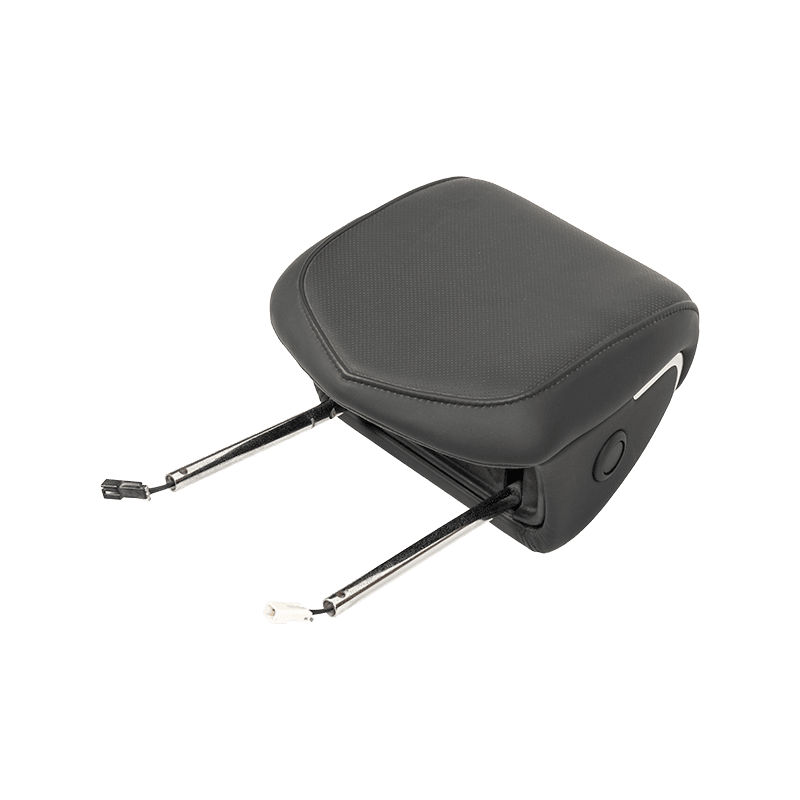 Cable-Controlled Foldable Rear Seat Headrest AssemblyCable-operated rear headrest folds to free folded-seatback space, with leather wrap and dual metal rods; relevant for MPV and estate rear-row packaging.View Product →
What a Headrest Validation Report Must Carry Before PPAP
A complete approval package carries five test types, and a package missing any one of them will stall at production part approval regardless of how well the part performs on the vehicle.
- Geometry measurement with the H-point machine installed, recording height and backset at every designated seating position.
- Static rearward moment test to 373 N·m, with permanent set and displacement limits recorded after load removal.
- Energy absorption on the head form at 24.1 km/h, with the deceleration trace kept as evidence rather than a pass mark alone.
- Adjustment and locking durability, including abuse cycles on the release control and a check that the pad still locks at every position afterwards.
- Corrosion and material checks, typically neutral salt spray on the frame and stay rods plus FMVSS 302 flammability on the foam and cover.
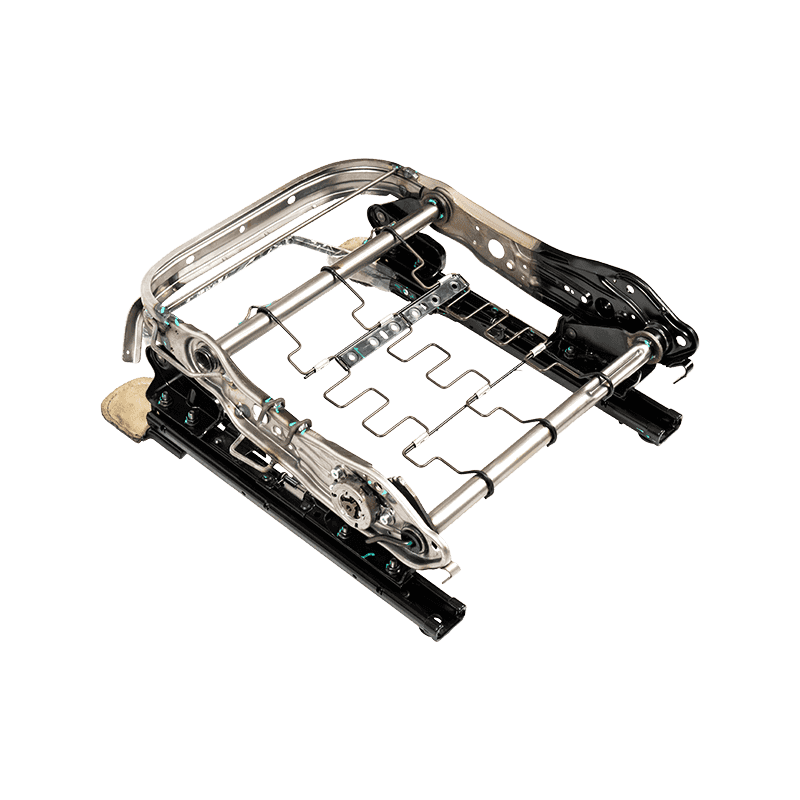
Programmes that run the geometry check first, before tooling release, avoid the common failure of a pad that meets the moment requirement but sits 15 mm too far forward to leave room for the seat cover. Our seat manufacturing capabilities and headrest development support are structured around those five gates, from first layout to the production part approval run.
A Procurement Checklist for Headrest Programmes
A buyer who fixes four numbers at the request-for-quote stage avoids almost every later change request, because those numbers define the frame, the foam and the tooling at once.
- State the target market set and the resulting backset and height limits, not just a reference regulation number.
- Fix the static moment requirement and ask for the weld and rod specification on the drawing.
- Specify foam density, hardness and the energy-absorption target as a pair, since one drives the other.
- Define adjustment positions, locked travel and the abuse cycle count for the release mechanism.
- Require the H-point geometry report, not a CAD section, as part of the initial sample submission.
- Agree the cover material and seam layout early, because surface build changes the measured backset.
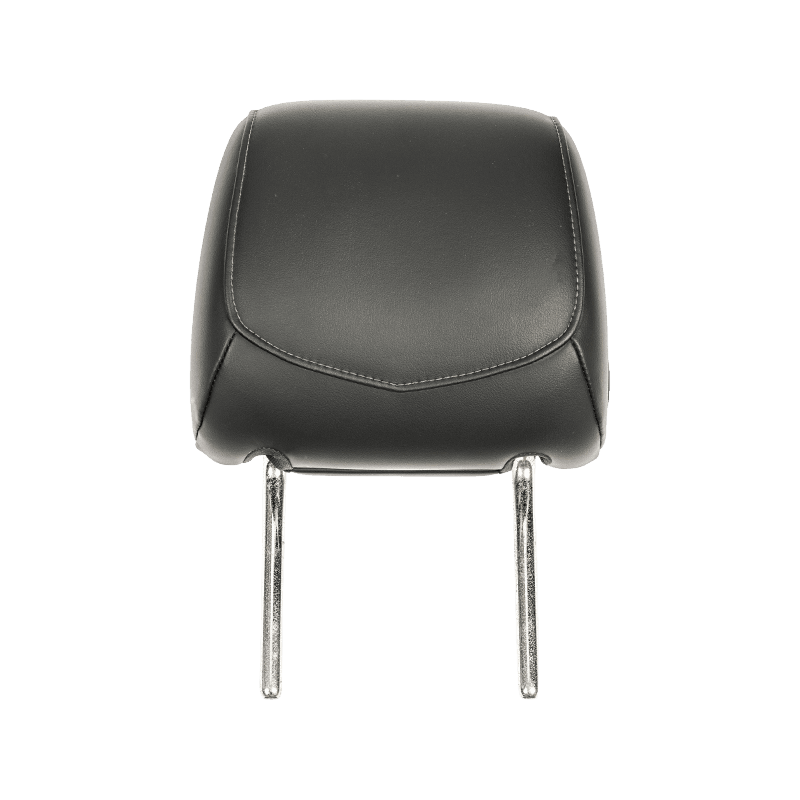
Ergonomic front headrest assemblies with height adjustment are a common starting point for passenger car programmes, and they show how the frame, foam and locking parts are specified together rather than as separate purchases.
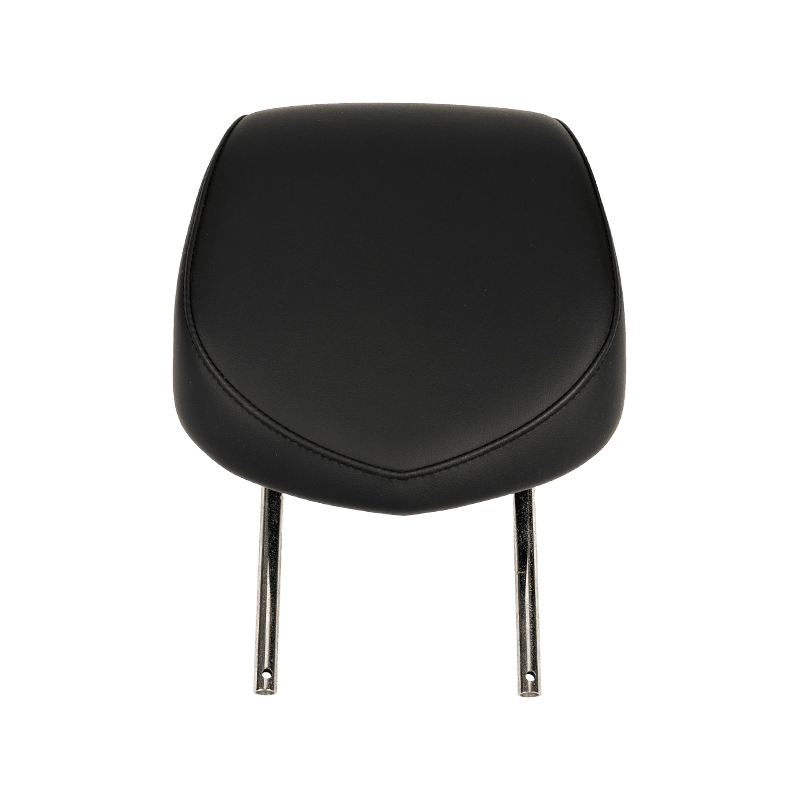 All-Black Ergonomic Front Seat Headrest AssemblyOEM-standard front headrest with mechanical height locking, high-density foam and metal guide posts; a complete assembly for passenger-car front-seat programmes.View Product →
Frequently Asked Questions
What is the minimum height for an automotive headrest?
UN R25 requires 800 mm above the H-point in the highest locked position and 720 mm in the lowest, while FMVSS 202a asks for roughly 750 mm. Both measure to the top of the restraint with the seat at its design position, so a global programme should target 800 mm.
How much backset is acceptable for whiplash protection?
50 mm or less satisfies UN R25, 55 mm satisfies FMVSS 202a, and the IIHS geometry rating needs 70 mm or less for a good score. Anything past 90 mm drops into the marginal band and starts to appear in claim data.
Are rear seat head restraints legally required?
In the United States, FMVSS 202a covers outboard rear positions in passenger cars. UN R25 applies to front seats and to rear positions where restraints are fitted. A rear centre headrest is usually a customer specification rather than a legal obligation.
Does a stiffer headrest improve or reduce safety?
Both, depending on the test. A stiff frame is needed to pass the 373 N·m static moment, but a stiff foam surface can push head-form deceleration past the 80 g ceiling in the UN R25 energy test. The workable answer is a stiff internal frame with a softer, shaped outer foam layer.
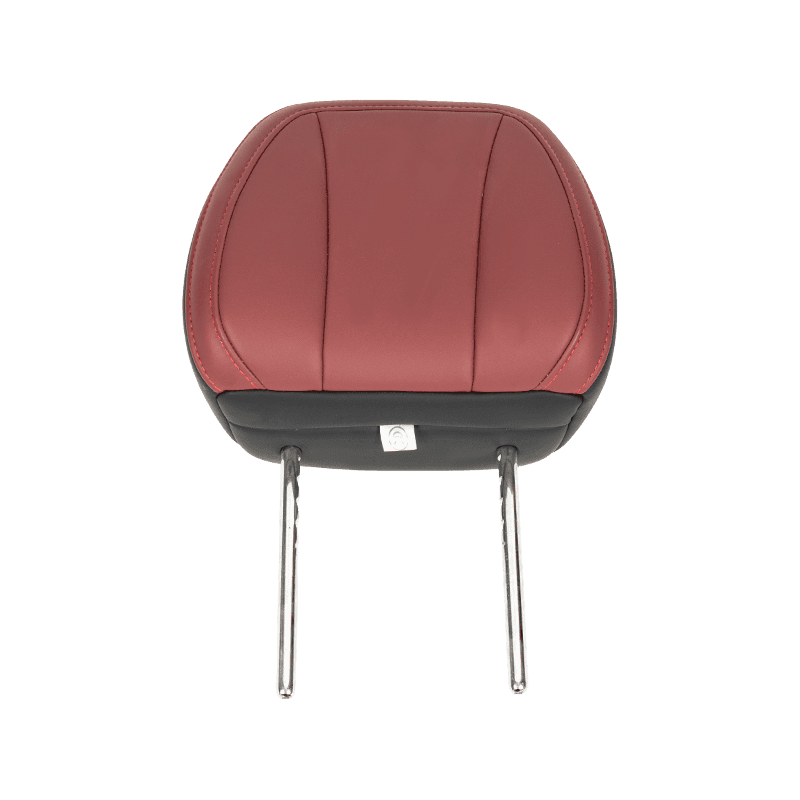

Copyright © Zhoushan Jinxin Auto Parts Co., Ltd. All Rights Reserved.
Custom OEM Car Seat Frame Assembly Suppliers
