 English
 русский
 Français
 Español
 Português
 عربى

Automotive Seat Assembly: Process, Components, and Manufacturing Insights
2026-10-22
Content
Automotive seat assembly is one of those subjects that looks simple from the outside. A seat appears to be little more than a cushion on a frame, yet the engineering behind it is remarkably deep. A single modern seat can contain dozens of components — steel stampings, welded brackets, polyurethane foam, trim covers, springs, hinges, motors, sensors, and wiring — and every one of them has to fit and function together for years of daily use.
At Zhoushan Jinxin Auto Parts, or JX Seat, we have been building seat components and complete seat assemblies for more than twenty years. Our work spans passenger vehicles, commercial trucks, buses, specialty vehicles, ATVs, and public seating, and we have supplied seat frames, molded foam, headrests, and armrests to OEMs and tier suppliers around the world. That long view shapes how we look at assembly: it is not just a production step, but the point where design intent, part quality, and process control finally meet.
In this article, we walk through the main components of an automotive seat assembly, the typical assembly sequence, the comfort and safety considerations that matter most, and what to look for when choosing a supplier for your own seat programs.
What Goes into an Automotive Seat Assembly?
Before diving into the assembly line, it helps to understand the building blocks. While seat designs vary by vehicle class and market, most modern automotive seat assemblies share a common architecture.
| Component | Function |
|---|---|
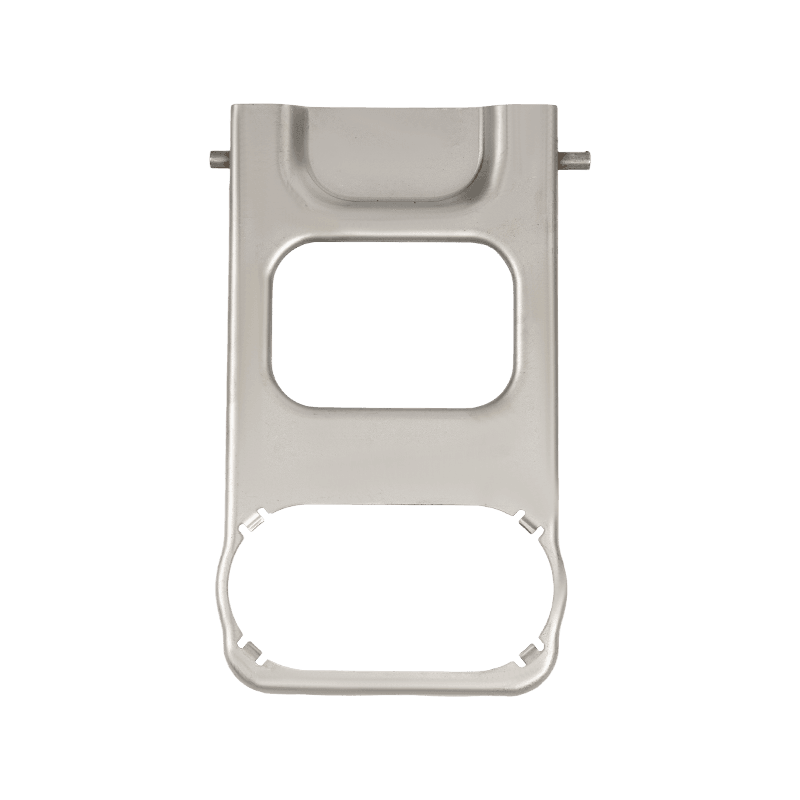
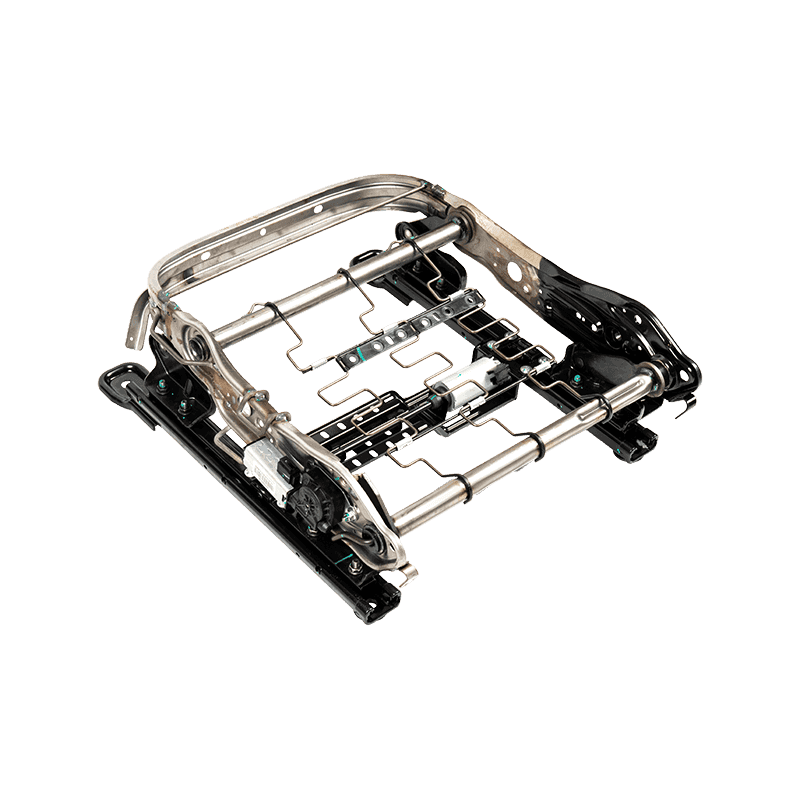
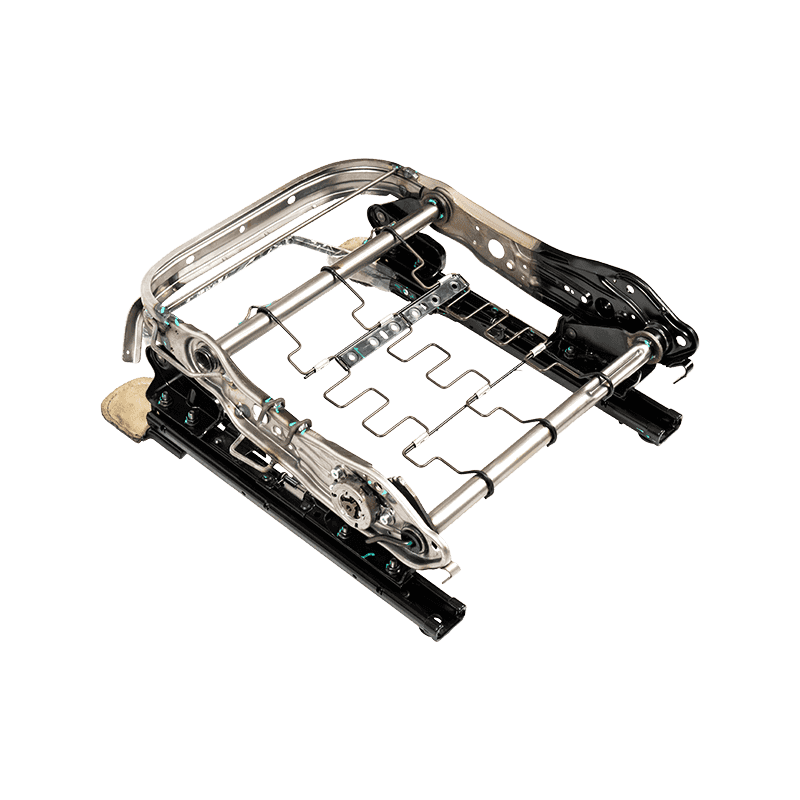
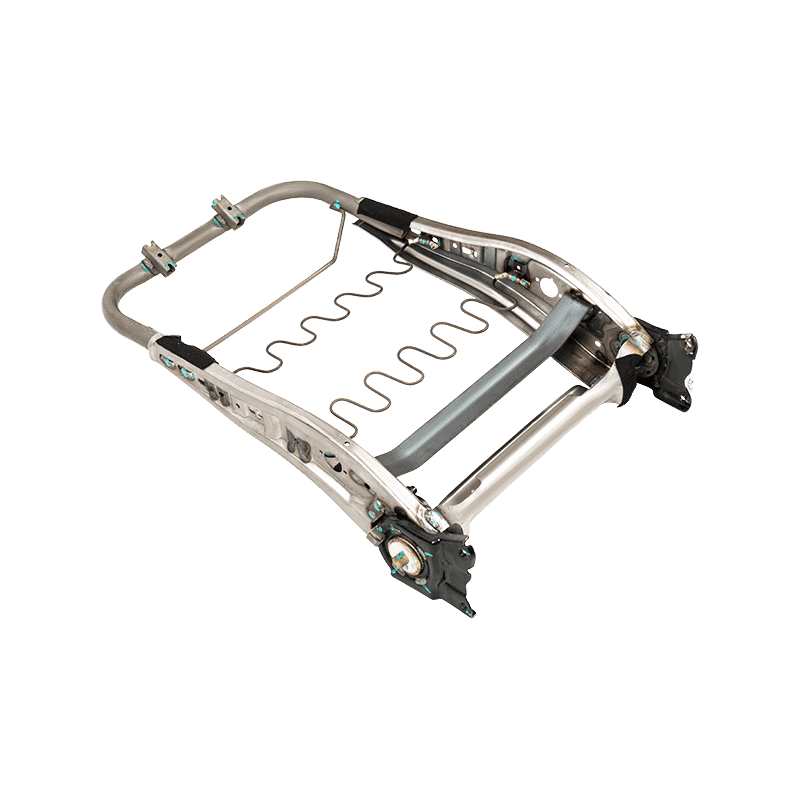
| Seat frame | Provides structural support and the crash load path; carries all other parts |
| Molded foam pads | Distribute occupant weight, absorb vibration, and shape the seating surface |
| Adjustment mechanisms | Allow fore-aft slide, height, and recline changes |
| Headrest | Supports the neck and helps reduce whiplash risk |
| Armrests | Add upper-body support and convenience for driver or passengers |
| Wiring harness | Powers adjusters, heating, ventilation, and occupant sensors |
| Trim cover | Protects the foam, resists wear, and defines the interior look |
The frame is the backbone of the assembly. It has to be strong enough to handle crash loads and repeated use, yet light enough to support fuel efficiency and range targets. Foam pads sit on top of the frame and define the perceived comfort of the seat. The adjustment mechanisms connect the seat to the vehicle floor, and the headrest, armrests, and trim finish the package. In modern vehicles, the wiring harness adds another layer of complexity, especially when the seat includes powered adjustment, heating, ventilation, or sensing functions.
One example of how these elements come together is our pickup truck manual 4-way adjustable driver seat assembly, which packages a steel frame, molded foam cushions, and manual adjustment hardware into a production-ready unit.
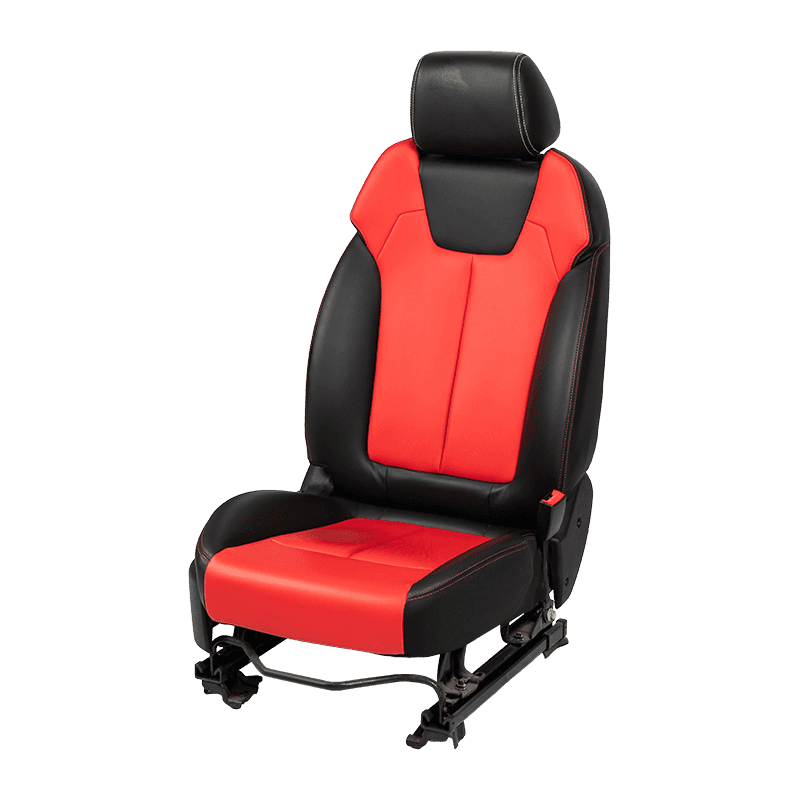 手动4向调节驾驶员座椅总成这款座椅总成集成钢制框架、模压泡沫和手动调节机构,适用于皮卡及乘用车,满足装配线典型流程需求。View Product →
How the Automotive Seat Assembly Process Works
Assembly lines differ from plant to plant, especially in the balance between manual work and automation, but the logical sequence is usually the same. Here is a typical seat assembly workflow.
- Frame preparation. Steel components are welded or bolted together into a complete frame assembly. Reinforcement plates, mounting brackets, and guide rails are added at this stage.
- Mechanism installation. Recliners, height adjusters, slide tracks, and latches are mounted to the frame and adjusted to specification.
- Foam placement. Molded polyurethane foam pads are positioned over the frame or inside the trim cover, depending on the trim method used.
- Trim application. The cover is pulled over the foam and frame, then secured with clips, hooks, or hog rings. Corners and seams are aligned carefully to avoid wrinkles.
- Hardware and electrical hookup. Seat belts, harnesses, heating elements, ventilation fans, and sensors are installed and connected to the vehicle interface.
- Final assembly. Headrests, armrests, side shields, and decorative covers are added, and all fasteners are tightened to the correct torque.
- Inspection and testing. Each finished seat is checked for appearance, dimensions, adjustment function, electrical operation, and any unwanted noise.
For commercial vehicles, the process is often more demanding. A long-haul truck seat may need air suspension, hydraulic damping, multiple power adjustments, and an integrated seat belt — all packaged into one assembly. These seats have to endure far more hours of use than a typical passenger car seat, so each step in the process carries a little more weight.
Our commercial vehicle 6-way electric power adjustable driver seat assembly is a good illustration of this. It combines a robust frame, high-resilience foam, electric adjusters, and trim into a seat built for daily fleet duty.
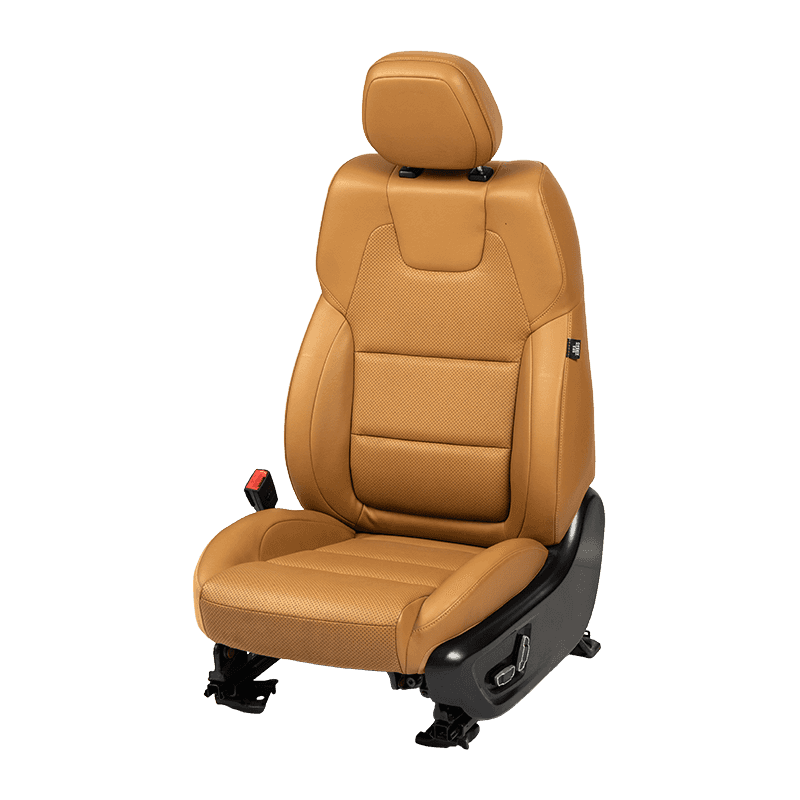 电动6向调节驾驶员座椅总成具备6向电动调节和独立头枕,适合商用车辆长期使用,其高回弹泡沫和坚固框架确保耐久性,是车队日常运营的理想选择。View Product →
Comfort, Safety, and Performance Considerations
A seat assembly is judged over the long term. Foam that feels comfortable in the showroom can turn flat after a year of hard use; a headrest that looks fine on paper can perform poorly in a crash simulation if its geometry is not matched to the seat structure. Successful seat programs balance several competing goals.
Dual-density foam is one of the most effective tools in seat assembly. A firmer base layer supports the body and reduces pressure on the spine, while a softer top layer improves initial comfort. Ventilated seat foam cores also help with airflow, which is increasingly important for vehicle climate systems.
Safety is equally important. Headrest position affects whiplash protection, so the assembly must hold the headrest at the correct height and angle. In commercial vehicles, integrated three-point seat belts are often built directly into the seat structure, requiring exact placement of the belt anchor points and lock mechanism.
We have covered molded foam material and performance optimization in more detail elsewhere, and it is worth a read if you are selecting foam for a new seat program.
The front dual-density polyurethane seat cushion foam core used in many of our seat programs shows how much difference a well-designed foam pad can make in the assembly.
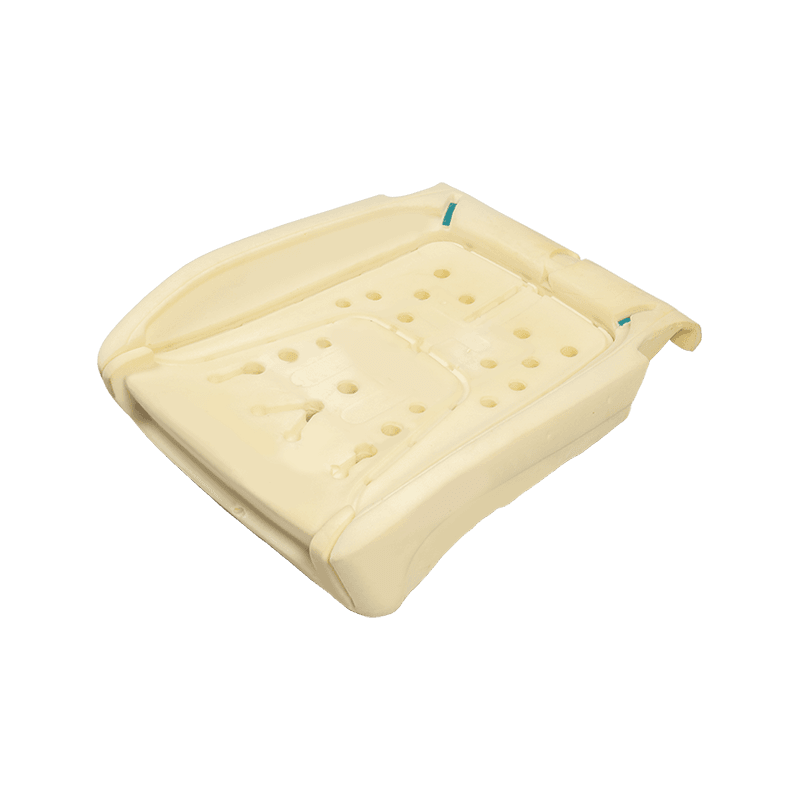 前座双密度聚氨酯泡沫芯该泡沫芯采用双硬度结构,兼顾舒适支撑与侧向稳定性,并通过高回弹和低压缩永久变形特性,提升座椅长期抗塌陷性能。View Product →
Choosing the Right Seat Assembly Partner
With so many variables in materials, tolerances, and production processes, the choice of assembly partner has a direct effect on program success. From our experience, three things matter most.
First, look for vertical integration. A supplier that controls frame fabrication, foam molding, and final assembly in one facility can manage tolerances more effectively and respond to issues faster than one that simply coordinates sub-suppliers.
Second, look for engineering depth. The best partnerships start before the design is frozen. Whether it is a build-to-print project or a concurrent engineering program, the supplier should be able to flag manufacturability issues and suggest practical improvements.
Third, look for proven delivery quality. Automotive seat programs depend on consistent batch output and traceability. A partner with experience supplying OEMs and tier suppliers knows how to document processes, maintain inspection records, and keep production aligned with launch timelines.
Our full catalog of seat assemblies and components covers everything from individual frames and foam cores to complete seating systems, so a customer can start with a single component and grow into a full assembly program.
Automotive seat assembly is a craft, a discipline, and an engineering challenge in equal measure. Get the parts right, respect the process, and the finished seat will show it.

Copyright © Zhoushan Jinxin Auto Parts Co., Ltd. All Rights Reserved.
Custom OEM Car Seat Frame Assembly Suppliers
