 English
 русский
 Français
 Español
 Português
 عربى

Adjustable Automotive Seat Armrest Frame: Design & Manufacturing Insights
2026-10-22
Content
Most drivers never think about the metal structure hidden inside their seat armrest. Yet every time they rest an elbow, shift position during a long journey, or use the armrest for support, that unassuming frame is carrying real weight. For seating engineers and procurement specialists, the adjustable automotive seat armrest frame is a component worth examining closely — it influences occupant comfort, assembly efficiency, and the long-term feel of the finished seat. At Zhoushan Jinxin Auto Parts, we have spent more than twenty years developing seat structures for automotive OEMs, Tier suppliers, and seat system manufacturers, and this article shares some of what we have learned about designing and manufacturing adjustable armrest frames.
Why the armrest frame deserves attention
In a modern vehicle interior, the armrest is one of the most frequently touched and loaded surfaces. It is used on nearly every ride, often for hours at a time, and it must feel solid without being harsh. The frame beneath the foam determines that feel. A well-executed armrest frame provides consistent support across its adjustment range, resists rattles and squeaks as the vehicle ages, and holds its geometry through years of daily use.
Getting those qualities right comes down to a few key responsibilities:
- Support and comfort: The frame must distribute the load of the arm evenly so the foam and cover remain comfortable over time.
- Adjustment integrity: Every pivot point, detent, or slide mechanism must stay precise and give the user a satisfying, repeatable action.
- Structural strength: In some seat designs, the armrest frame contributes to the side-impact load path, so material choice and weld quality matter.
- Integration efficiency: A frame with consistent tolerances simplifies foam molding, cover attachment, and final seat assembly.
Understanding adjustment mechanisms
Adjustable armrest frames come in several mechanical forms, each suited to a different seating position and user expectation. The table below summarizes the most common architectures.
| Adjustment type | Common mechanism | Typical application |
|---|---|---|
| Height adjustment | Ratchet, detent, or locking slide | Driver and front passenger seats |
| Fore-aft sliding | Track and latch assembly | Long-haul and heavy-duty seats |
| Angle or swivel | Friction hinge or indexed pivot | Rear center armrests with cupholders |
Each approach creates its own design constraints. Height-adjustable frames, for example, need a locking mechanism that feels positive without rattling, while sliding frames require guide surfaces that remain quiet even after thousands of cycles. The choice of mechanism also affects packaging space and weight, so early alignment between the seat team and the frame supplier is essential.
Design considerations for adjustable armrest frames
Designing a reliable adjustable armrest frame is a balancing act between stiffness, weight, packaging, and cost. Several factors deserve particular attention.
Load performance
The frame must handle sustained static loads from the occupant's arm as well as occasional impact loads. Typical validation includes static load tests on the armrest surface, durability cycling of the adjustment mechanism, and, in some programs, side-impact load cases. Finite element analysis during the design phase helps identify high-stress areas before any tooling is cut.
Packaging and weight
Space inside the seat side panel is tight, and every kilogram counts in a modern vehicle program. Combining tubular steel sections with stamped sheet metal creates a stiff structure without excessive weight. Our engineers regularly support customers with lightweight optimization, using methods similar to those discussed in our article on seat frame structural design and lightweight optimization technology.
Tolerance management
The adjustment mechanism only performs well when the surrounding frame holds its geometry. Tight control of hole positions, weld locations, and bracket angles prevents binding and uneven wear, and it also simplifies the fitting of foam and trim covers in later assembly stages.
Noise and vibration
Squeaks and rattles are among the most common complaints in interior quality surveys. Proper clearances, strategically placed bushings or over-molded features, and controlled surface finishes all contribute to keeping the armrest quiet over its service life.
Materials and manufacturing processes
Steel remains the dominant material for adjustable armrest frames, usually in the form of cold-rolled sheet or welded tubing. It offers strength, predictable weldability, and proven crash performance. The typical manufacturing route involves stamping, bending, and welding, followed by surface treatment to protect against corrosion.
At JX Seat, we produce armrest frames in-house through a vertically integrated process. We develop the tooling, stamp or bend the components, weld the assemblies, and apply surface finishing before the parts leave our plant. This control helps us keep tolerances tight and quality consistent across high-volume production runs.
Welding quality deserves special attention on adjustable frames, because the brackets that carry the adjustment mechanism are often welded in place. Clean weld placement and minimal distortion ensure that the mechanism mounts correctly and operates smoothly through every cycle.
Front-seat and rear-center applications
Armrest frames appear in two primary locations in a passenger vehicle: on the front seats and in the rear center seat.
Front-seat side-mounted armrests
Front-seat armrests are typically mounted to the seat back frame or the side of the cushion structure. They need a slim profile to fit between the occupant and the door or center console, and the adjustment mechanism must be easy to operate with one hand while driving. The frame also has to hold adjustments securely so the armrest does not drift under load.
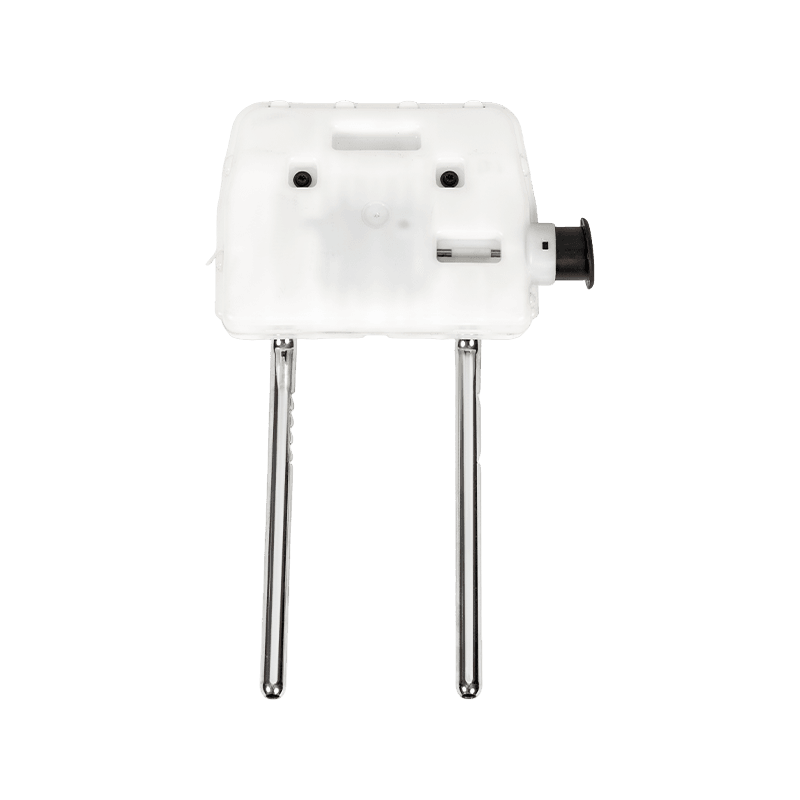
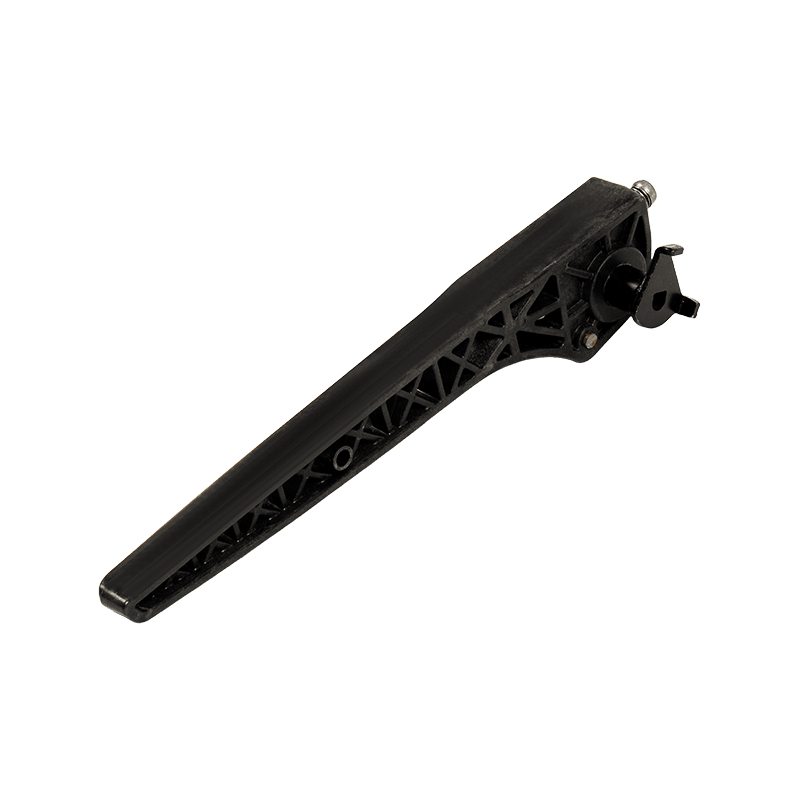 Front Seat Side-Mounted Armrest Internal Support Frame AssemblyThis load-bearing plastic frame integrates hinges and locking mechanisms, supporting multi-angle adjustment for driver and passenger armrests. It ensures durability and comfort during long drives, fitting OEM seats.View Product →
Rear center armrests
Rear center armrests fold down from the seat back and often carry additional features such as cupholders, storage trays, or an access panel to the trunk. The frame therefore goes beyond a simple bracket — it becomes a load-bearing structure that supports the folded armrest and whatever the rear passengers place on it, while folding away neatly when not in use.
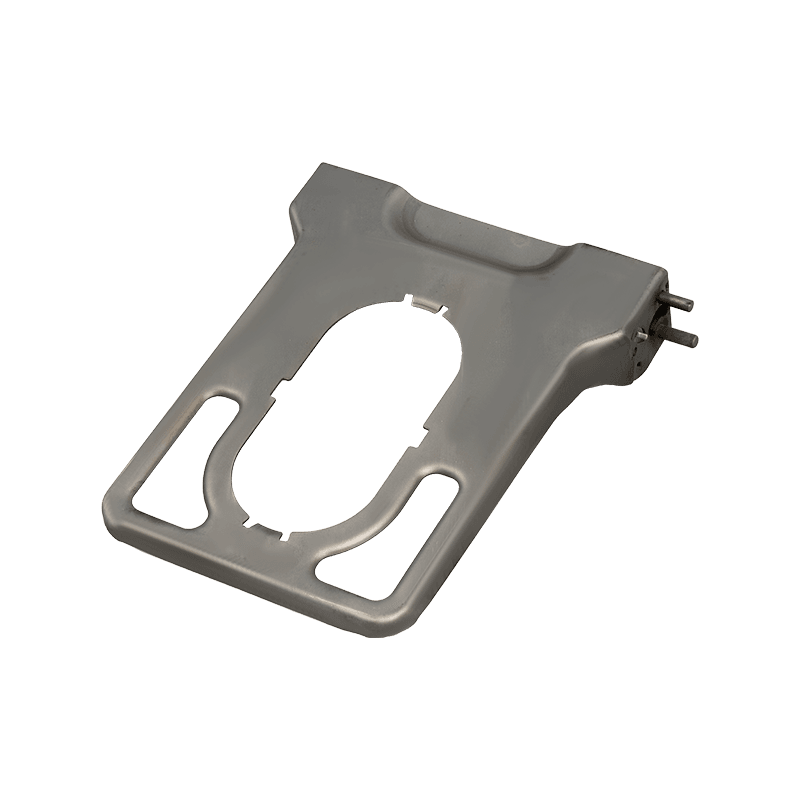 Rear Center Seat Armrest Internal Load-Bearing Frame AssemblyA stamped steel frame that supports fold-down rear armrests with cupholder mounts and locking pivots. It withstands heavy loads and repeated use, ensuring stability and noise-free performance.View Product →
Quality assurance for long service life
An adjustable armrest frame may be cycled tens of thousands of times over a vehicle's life. Dimensional consistency from part to part is therefore critical. We measure key features carefully and perform functional checks on the adjustment mechanisms before frames leave the factory, so the part that reaches your assembly line behaves exactly like the sample you approved.
Prototyping also plays an important role in successful programs. Many customers ask for prototype frames early in development so they can verify fit, feel, and adjustability before committing to production tooling. Because our manufacturing is vertically integrated, we can produce small batches quickly and iterate on design feedback without long lead times.
Choosing the right partner
Selecting a supplier for adjustable armrest frames is about more than unit price. You want a partner who understands the full context of the component, joins the conversation early, offers honest engineering feedback, and manages the transition from prototype to production smoothly.
At JX Seat, we aim to be exactly that kind of partner. Our team works alongside customers on concurrent engineering projects, build-to-print production, and everything in between. If you are evaluating suppliers for your next seat program, we invite you to explore our capabilities and product range.
Final thoughts
The adjustable automotive seat armrest frame is a small component with an outsized influence on how a seat feels after years of service. Thoughtful design, solid materials, and disciplined manufacturing all show up in the final product, and the right supplier makes the difference. If you are developing a new seat program or improving an existing one, we would welcome the opportunity to discuss how our armrest frame assemblies can support your project.

Copyright © Zhoushan Jinxin Auto Parts Co., Ltd. All Rights Reserved.
Custom OEM Car Seat Frame Assembly Suppliers
