 English
 русский
 Français
 Español
 Português
 عربى

Automotive Neck Support Foam: Density, Compression Set and Sourcing Specs
2026-11-18
Content
- 1 Three Values Decide Whether Neck Support Foam Passes Validation
- 2 How the Main Foam Grades Compare on the Values Buyers Audit
- 3 Memory Foam or High-Resilience Foam for a Cervical Cushion
- 4 Neck Support Foam Changes Head Restraint Geometry, So Measure Backset
- 5 Mold Vents and Skin Finish Decide Where the First Hard Spot Appears
- 6 Sample Approval Checklist for Automotive Neck Support Foam
- 7 Questions Buyers Ask Before Approving a Neck Support Foam Sample
A neck support program rarely fails on the drawing. It fails in the lab, when a molded cushion that felt perfect on the first prototype returns from a 22-hour compression set test at 70 C with a 17 percent thickness loss, or it fails in service, when the same part bottoms out against the head restraint frame after a year of daily driving.
Both outcomes are decided long before the first tool is cut. Automotive neck support foam is a molded flexible polyurethane cushion that fills the gap between the cervical spine and the head restraint, carries load close to the head, and works with the restraint to keep the occupant inside the backset limits set by FMVSS 202a and ECE R17. Buyers who treat it as a comfort accessory usually meet the difference at the first 50,000-cycle durability check. JX Seat molds automotive neck support foam, cervical cushions and matching lumbar parts on the same polyurethane line as seat foam cores.
Definition: automotive neck support foam is a molded polyurethane cushion, typically 40 to 60 kg/m3 in density and 3.5 to 6.5 kPa in 25 percent compression stress, shaped to support the cervical curve; it is validated on density, compression stress, compression set, flammability and cabin air quality.
Three Values Decide Whether Neck Support Foam Passes Validation
Density, 25 percent compression stress and compression set decide pass or fail. Colour, stitching and surface texture do not. A cushion that meets all three keeps its shape for the life of the vehicle; one that misses a single value will either feel hard on a cold morning or collapse into the frame within 18 months.
Density Sets the Durability Floor
Below 40 kg/m3 there is too little polymer per unit volume to resist fatigue. Cell walls thin under repeated loading, the part takes a permanent set, and the cushion that felt generous at month one sits flat at month fourteen. For head-adjacent load, 45 to 55 kg/m3 is the working range; memory foam needs 50 to 60 kg/m3 because its walls are thinner and recover more slowly.
25 Percent Compression Stress Sets the Feel
Specify hardness as a measured value, not as soft, medium or firm. ISO 3386 gives a repeatable number, and most cervical cushions land between 3.5 and 6.5 kPa at 25 percent compression. A 2 kPa part feels plush for a week and then pipes road vibration into the neck; a part above 8 kPa feels like a block on a 90-minute drive.
Compression Set Sets the Warranty Exposure
ISO 815, 22 hours at 70 C, is the entry test, and humid-age variants at 40 C and 95 percent relative humidity are common on export programs. High-resilience foam typically returns 8 to 11 percent set, memory foam 5 to 8 percent, standard foam 12 to 16 percent. Anything above 15 percent shows as a flat spot within two summers.
Rule of thumb: when a sample passes compression set but misses 25 percent compression stress by more than 1 kPa, change the formulation, not the mold. Hardness problems come from chemistry; thickness problems come from the tool.
How the Main Foam Grades Compare on the Values Buyers Audit
Four grades cover nearly every cervical cushion program, and the gap between them is measured in compression set and cost per part rather than in marketing language.
| Grade | Density, kg/m3 | Set after 22 h at 70 C | Recovery | Typical position |
| Standard PU | 40-45 | 12-16 percent | Fast | Entry-level cervical cushion |
| High-resilience | 45-55 | 8-11 percent | Fast | Head restraint insert, fleet seats |
| Memory foam | 50-60 | 5-8 percent | Slow | Comfort-led and aftermarket cushions |
| Dual density | 50-60 | 6-9 percent | Mixed | Long-haul commercial vehicle seats |
Dual-density parts grow fastest because they split the job: a firmer core holds the contour while a softer skin controls first contact. The trade-off is tooling, since two shots on an indexing carrier typically lift minimum order quantity by 30 to 40 percent against a single-shot part.
Memory Foam or High-Resilience Foam for a Cervical Cushion
Choose memory foam when the cushion is sold as a comfort accessory or fitted to sleeper cabs; choose high-resilience foam when the part sits inside a head restraint and must recover instantly after loading. The recovery curve, not density, drives the decision.
- Compression set of 5 to 8 percent, the lowest of the four grades
- Spreads pressure across a wider contact patch on long drives
- Hardness shifts with temperature, so a cold cab feels firmer
- Higher cost per part and slower demolding cycles
- Instant recovery suits parts loaded and released constantly
- Hardness stays stable between -10 C and 60 C
- Better fatigue resistance at the same density
- Compression set of 8 to 11 percent, higher than memory foam
Most OEM programs settle on a high-resilience core with an 8 to 12 mm memory foam surface layer. That pairing keeps the recovery speed of the core, softens the first few millimetres of contact, and still demolds on a standard cycle.
Neck Support Foam Changes Head Restraint Geometry, So Measure Backset
Any cushion placed between the neck and the head restraint changes effective backset, and that number is regulated. FMVSS 202a caps backset at 55 mm in the front row and ECE R17 applies a comparable limit, so a thick cervical section can consume most of the legal budget if it is mounted on the wrong surface.
The geometry works because the cervical spine already sits forward of the restraint. A contoured 40 to 60 mm section fills the natural gap behind the neck without pushing the skull away from the restraint. A flat, over-stuffed pillow does the opposite: it tilts the head forward, increases cervical loading, and produces the discomfort the product was bought to fix.
Backset check: measure with the cushion installed against a bare-seat reference. A change of 10 mm or less is normally accepted; anything above 20 mm calls for a new contour, not a softer foam.
Mold Vents and Skin Finish Decide Where the First Hard Spot Appears
A uniform foam core matters more than a 2 kg/m3 change in density, and uniformity comes from the tool. Draft angles under 3 degrees, weak venting at the deepest point of the cervical curve and sharp split lines all create local density variation, typically 3 to 6 kg/m3 heavier along the split, which is exactly where the first hard spot shows up.
Skin choice follows the application. Integral skin of 0.5 to 1.5 mm gives a clean, wipeable surface for commercial vehicle cabs; a fabric wrap adds 1 to 2 mm, hides split lines and suits passenger car interiors. Venting deserves its own check, because a closed-back part with no vent traps gas and leaves a void that only appears after trimming. Our molded seat foam material and performance optimization notes apply the same venting logic to backrest cores.
Sample Approval Checklist for Automotive Neck Support Foam
Approve a neck support sample against five measurable checkpoints and reject it on any single failure rather than averaging the results. The order below matches the sequence in which problems actually appear: geometry first, then specification, then durability.
- Lock the CAD envelope and the backset budget. Confirm compressed thickness in the installed position and keep the backset change at 10 mm or less against the bare seat.
- Write measured values on the drawing. Density with a tolerance of plus or minus 3 kg/m3, 25 percent compression stress to ISO 3386, compression set to ISO 815. Never the words soft or firm.
- Request the full aging data set. A 22-hour test at 70 C is the minimum; add a humid-age result when the vehicle is sold in a coastal or tropical market.
- Run 50,000 compression cycles. Above 90 percent thickness retention is acceptable; below 85 percent will show a flat spot inside the warranty period.
- Confirm flammability and cabin air quality. An FMVSS 302 burn rate of 102 mm per minute or less, plus fogging and VOC data for enclosed cabs.
JX Seat (Zhoushan Jinxin Auto Parts Co., Ltd.) molds neck and lumbar support foam with the same polyurethane process used for seat cushions and head restraint foam, which keeps density and compression set aligned across a full seat program.
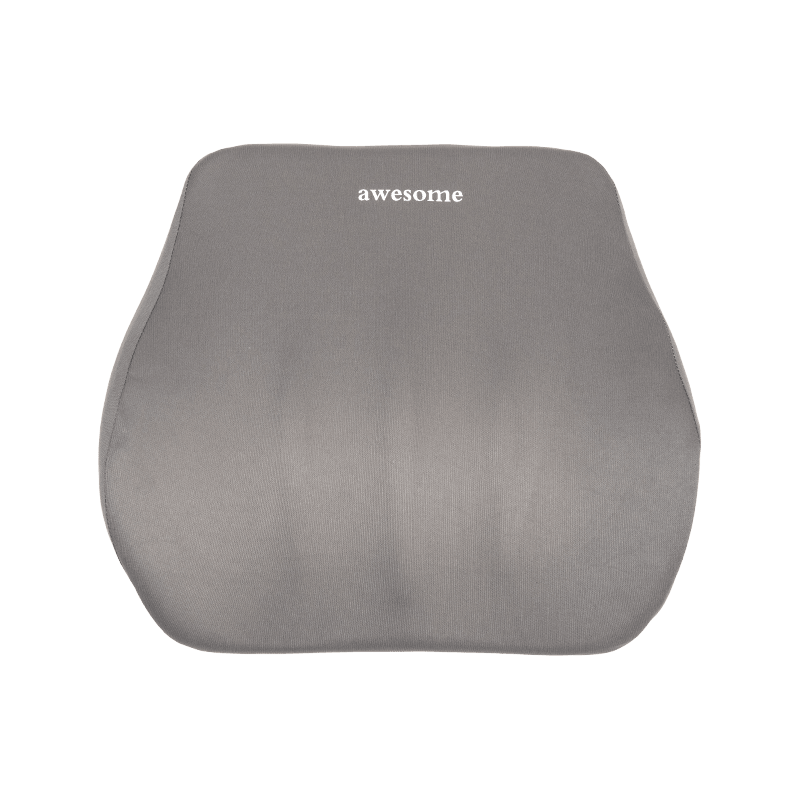 Ergonomic Memory Foam Car Neck Headrest PillowReview this neck pillow for adjustable slow-rebound foam, density choices, and certification options suited to driving support.View Product →
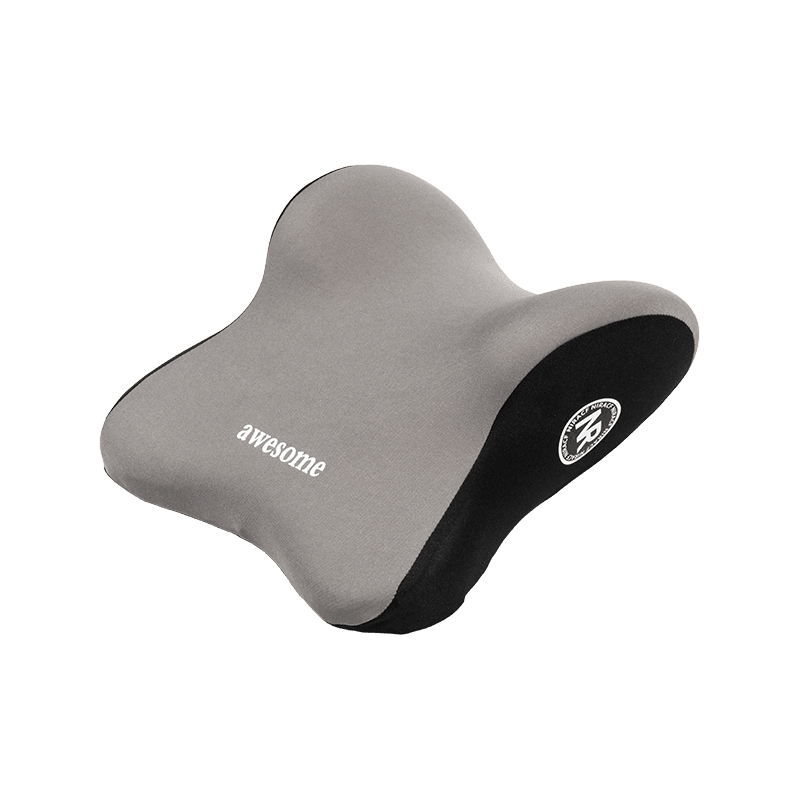 Ergonomic Memory Foam Cervical Neck CushionCompact cervical cushion uses slow-rebound memory foam with density and certification choices for travel, driving, and desk-side neck support.View Product →
Questions Buyers Ask Before Approving a Neck Support Foam Sample
What density should automotive neck support foam be?
Specify 45 to 55 kg/m3 for cushions that take direct head-adjacent load. Memory foam formulations need 50 to 60 kg/m3 because their thinner cell walls recover more slowly, and anything under 40 kg/m3 will fatigue visibly within 18 months on a daily-driven vehicle.
How is compression set tested on a neck cushion?
ISO 815 is the standard method: compress the sample to 25 percent of its height, hold it for 22 hours at 70 C, release, and measure residual deformation after a 30-minute recovery. A molded neck support should return a set of 10 percent or less, and humid-age variants of the same test are used for export programs.
Can a neck cushion be added without breaking head restraint compliance?
Yes, provided the effective backset stays inside the regulatory limit. Measure at the installed position with a head form referenced to the seat reference point. FMVSS 202a caps backset at 55 mm, and a contour that shifts the bare-seat value by 10 mm or less is normally accepted.
What is the difference between neck support foam and lumbar support foam?
Both are molded polyurethane, but they carry load in different directions. Neck support foam wraps a smaller radius and usually runs 45 to 60 kg/m3 at 3.5 to 6.5 kPa compression stress; lumbar foam is broader, sits lower in the backrest, and typically runs softer at 3 to 5 kPa so it compresses across the whole lumbar curve.

Copyright © Zhoushan Jinxin Auto Parts Co., Ltd. All Rights Reserved.
Custom OEM Car Seat Frame Assembly Suppliers
